The numbers thrown around in investment banking circles sound like typos to anyone outside the industry. A 22-year-old fresh out of an undergraduate program clearing six figures before ever managing an independent portfolio seems like an anomaly. But the entry-level investment banking analyst salary is not a generic corporate wage—it is a complex package structured around market volatility, firm positioning, and personal endurance.
If you are researching the Investment Banking Analyst Salary, you have probably asked yourself a simple question: how much do investment bankers make right out of the gate? The answer is rarely a single, static figure. Compensation in investment banking can vary significantly based on the firm, market conditions, deal flow, and individual performance.
That is why two first-year analysts sitting at identical desks in the same bullpen can walk away at the end of the fiscal year with total earnings that differ by $45,000 or more. When evaluating an Investment Banking Analyst Salary, it is important to consider the full compensation package—including base salary, signing bonuses, year-end bonuses, and other performance-based incentives—rather than focusing on a single number.
To understand why, you have to break down the mechanics of investment banking compensation, the structural differences between global financial institutions, and how your actual hourly wage stacks up against the lifestyle trade-offs.
1. The Compensation Framework: Base vs. Bonus
When evaluating an investment banking salary, the headline figure you see in offer letters is only half the story. Total compensation is bifurcated into fixed and variable components.
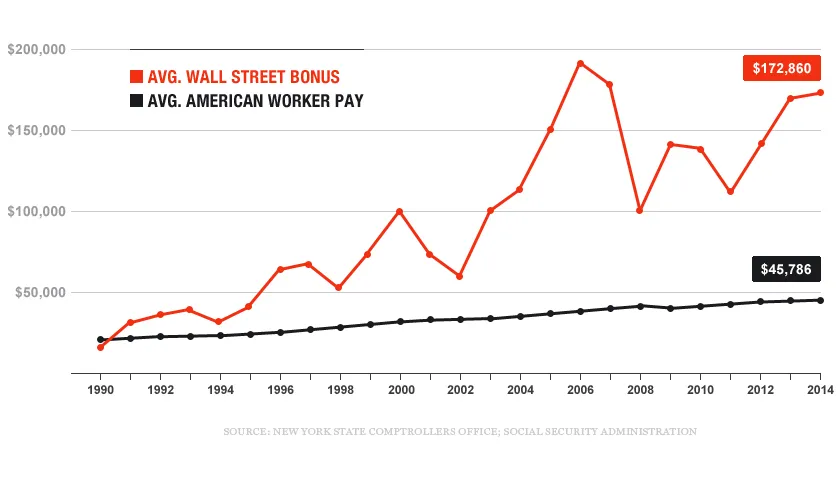
- Base Salary: This is your predictable monthly cash flow. Over the last few years, major Wall Street institutions systematically adjusted baseline analyst pay upward to stay competitive with big tech and private equity firms. Today, first-year base pay is heavily standardized across major players.
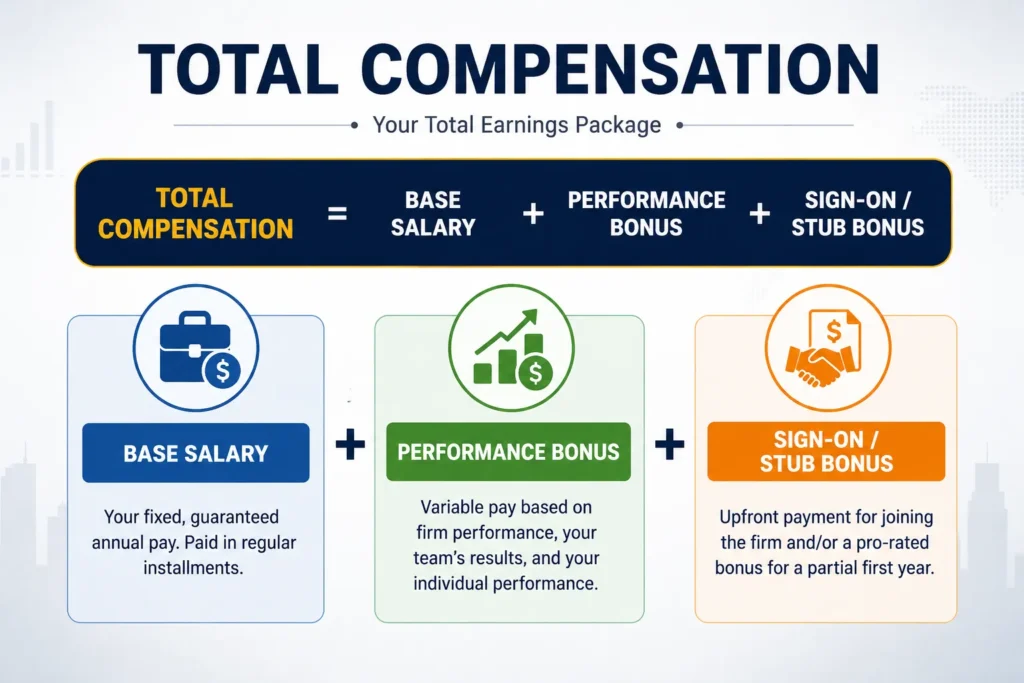
- Performance Bonus: This is where the real variance occurs. Paid out annually (typically in the summer for analysts), the bonus is calculated as a percentage of your base pay and is determined by three variables: firm profitability, your group’s overall deal execution, and your individual ranking within your cohort. As noted by the annual compensation analysis on eFinancialCareers, total analyst packages regularly shift depending on global M&A deal volumes.
- Sign-On / Stub Bonus: New hires frequently receive an upfront payment to assist with relocation. Additionally, because the banking fiscal year often runs on a different cycle than graduation timelines, analysts may receive a pro-rated “stub” bonus for their first partial year of work.
2. Comprehensive Salary Breakdown by Seniority
The trajectory of an investment banker wage rises sharply with every 12 months of service. At the junior level, professionals are classified across a three-year progression path before moving into management roles.

The following benchmarks reflect current market realities across elite financial institutions globally, scaling across base levels and total year-end earnings.
Global Analyst Compensation Tiers (USD)
| Career Stage | Average Experience | Base Salary Range | Typical Bonus Range | Total Expected Compensation |
| Analyst Year 1 | 0–1 Years | $110,000 – $115,000 | $70,000 – $110,000 | $180,000 – $225,000 |
| Analyst Year 2 | 1–2 Years | $115,000 – $125,000 | $85,000 – $135,000 | $200,000 – $260,000 |
| Analyst Year 3 | 2–3 Years | $125,000 – $135,000 | $100,000 – $155,000 | $225,000 – $290,000 |
Domestic & Regional Realities (India Context)
For professionals operating in primary financial corridors like Mumbai (BKC/Nariman Point) or handling international execution out of technology hubs like Bengaluru, the banker investment salary structure retains the same performance-driven architecture but maps to regional economic frameworks.

- Global Bulge Brackets (Front Office): First-year analysts at global firms operating out of India command baseline packages starting between ₹18 LPA and ₹25 LPA. With performance incentives factored in, top-tier total compensation regularly crosses ₹30 LPA.
- Elite Domestic Investment Banks: Highly competitive domestic firms (such as Kotak Investment Banking or Axis Capital) present analyst base packages hovering around ₹12 LPA to ₹18 LPA, heavily supplemented by local deal-linked cash bonuses.
- Knowledge Process Centers & Captives: Functional execution, valuation modeling, and analytics centers (GCCs) typically range from ₹8 LPA to ₹14 LPA for starting analyst roles.
3. Firm Typologies: Who Pays the Most?
Not all institutions structure their books the same way. The market is broadly divided into three core categories, each offering a distinct approach to compensation investment banking.
Elite Boutiques (Highest Cash Pay) ➔ Bulge Brackets (High Base + Global Prestige) ➔ Middle Market (Lower Base + Broader Exposure)

Elite Boutiques
Firms like Centerview Partners, Evercore, Lazard, and PJT Partners frequently outpay traditional Wall Street institutions at the junior level. Because these firms operate lean deal teams and focus strictly on high-margin strategic advisory without maintaining massive balance sheets for commercial corporate lending, they pass efficiency down to their talent. Elite boutiques often pay a 15% to 25% premium on year-end bonuses, and notably, these bonuses are paid entirely in cash rather than deferred equity at the junior level.
Bulge Brackets
The global household names—Goldman Sachs, Morgan Stanley, J.P. Morgan, Citi, and Bank of America—form the baseline of the industry standard. While their base salaries are highly standardized (typically anchored at $110,000 for incoming classes), their massive scale means bonus pools fluctuate heavily based on macroeconomic conditions and global market volume.
Middle-Market & Regional Firms
Firms managing mid-sized enterprises or regional transactions generally track 15% to 30% below bulge-bracket baselines. However, analysts at these firms often experience a broader variety of deal exposure and more direct client contact, trading a small percentage of immediate banker salary upside for a more sustainable lifestyle or unique transactional experience.
4. The Hourly Rate Reality Check: What Do You Actually Earn?
Before committing to an elite financial career solely for the financial metrics, it is vital to contextualize the absolute volume of labor required. The investment banking analyst is the foundational engine of any deal team. Your responsibilities include refining discounted cash flow (DCF) variants, structuring pitch books, running precedent transaction analyses, and executing granular data audits.
According to industry deep-dives from Mergers & Inquisitions, this translates to an average work week ranging between 70 and 85 hours. During live transactions or intense cross-border acquisitions, those figures can push upward toward 100 hours.
To understand the true cash utility of an investment banker wage, use the analytical tool below to map out the relationship between base compensation, year-end bonus pools, and actual weekly operational hours.
When you calculate the total hours logged over a standard 50-week operational year, an analyst pulling in $190,000 all-in while averaging 85 hours a week earns an effective hourly wage of roughly $44.70.
For perspective, a corporate development or management consulting professional earning a lower absolute salary of $115,000 but working a predictable 50 hours a week takes home roughly the same hourly rate—minus the severe physical and mental wear-and-tear of the banking ecosystem.
5. Performance Buckets: The Multi-Tiered Reality
Your assignment to a specific performance tier at the end of the fiscal year dictates your final cash allocation. Most investment banking groups score analysts across four or five distinct ranking categories.
[Top Bucket: 90-100%+ Bonus] ➔ [Middle Bucket: 70-80% Bonus] ➔ [Bottom Bucket: <50% Bonus/Exit]
- Top Bucket (Rank 1): Reserved for the top 15% to 20% of the analyst class. These individuals demonstrate flawless execution, anticipate associate requirements, and manage complex cross-border workflows under pressure. They receive maximum bonus allocations, often matching or occasionally exceeding their base pay.
- Middle Bucket (Rank 2 & 3): The vast majority of the cohort lands here. These analysts are technically reliable, work hard, and execute models with minimal errors. Their bonuses range from 65% to 80% of base salary.
- Bottom Bucket (Rank 4 & 5): Analysts who struggle with technical accuracy, speed, or team communication. Their bonuses are heavily discounted, and their assignment to this tier serves as a clear indicator to seek alternative career options before the formal analyst program concludes.
Best Way to Invest Money Without Risk: The 2026 Defensive Playbook
6. The Corporate Ladder: Long-Term Income Progression
The analyst position is designed as a temporary sprint. Most institutional frameworks operate on a two-to-three-year analyst model. After this window, high performers are offered a direct promotion to Associate, while others leverage their pedigree to exit into private equity, hedge funds, or corporate strategy positions.

For those who choose to climb the institutional hierarchy, the growth curve of how much do bank investors make scales exponentially as responsibilities shift from execution to relationship management.
Analyst (Execution) ➔ Associate (Management) ➔ VP (Process Control) ➔ Director (Origination Track) ➔ Managing Director (Revenue Generation)
Associate (Years 3–6)
- Base Salary: $150,000 – $200,000
- Total Compensation: $240,000 – $450,000+
- Role: Associates are frequently recruited straight out of top-tier MBA programs or promoted internally from the analyst pool. As broken down in the Wall Street Prep Associate Salary Guide, they check financial models, draft complex deal narratives, and coordinate day-to-day communication between junior staff and senior leadership.
Vice President (Years 6–10)
- Base Salary: $250,000 – $350,000
- Total Compensation: $500,000 – $1,000,000
- Role: VPs act as deal quarterbacks. They run process mechanics, ensure legal compliance, manage client expectations, and are personally responsible for the quality of everything that exits the presentation pipeline. Deferrals become more prominent here, with 20% to 30% of incentives vesting over a multi-year horizon.
Managing Director (10+ Years)
- Base Salary: $400,000 – $500,000+
- Total Compensation: $1,000,000 – $5,000,000+ (Highly variable)
- Role: MDs sit at the apex of the pyramid. Their fixed base salary is a minor detail; their wealth is driven by deal origination fees. If an MD brings in massive mergers, acquisitions, or debt issuances, their bonus pool scales directly with that transactional revenue. Conversely, in a market freeze, an MD’s compensation can drop significantly.
7. Is the Analyst Compensation Worth the Cost?
An entry-level investment banking analyst salary is undeniably peerless relative to alternative undergraduate employment fields. Breaking past $200,000 before your mid-twenties provides a remarkable foundational step for long-term financial security.

However, the industry exacts its toll in raw time, delayed sleep, and intense institutional pressure. The compensation isn’t a premium for brilliance alone; it is a premium paid for absolute, uninterrupted availability. Understanding this system is the only way to determine if you are truly ready to enter the arena.
Frequently Asked Questions (FAQs)
Do investment banking analysts get paid a signing bonus?
Yes. Most bulge bracket and elite boutique firms provide an upfront signing bonus ranging from $10,000 to $15,000 to cover relocation costs and initial professional transitions.
Why do elite boutiques pay higher analyst salaries than bulge bracket banks?
Elite boutiques advise on massive enterprise transactions but do not provide massive balance sheet lending or retail banking operations. Because they have leaner operations, lower overhead, and highly concentrated deal pools, they can return more cash directly to their advisory teams.
What portion of an investment banking analyst salary is paid in stock?
At the junior analyst level, compensation is almost universally paid out in 100% upfront cash. Equity deferrals typically become active once a professional climbs to the Associate or Vice President level, where 20% to 40% of the annual bonus might be subject to a three-to-five-year vesting schedule.
How does an investment banking analyst salary compare to private equity?
Entry-level private equity roles at mega-funds usually pay on par with or slightly above top-tier second-year investment banking analyst roles. However, private equity firms typically hire analysts directly out of investment banking programs, meaning true entry-level positions without previous banking experience are exceptionally rare.
How does a market downturn affect analyst compensation?
While base salaries remain insulated during market drawdowns, the performance bonus pool contracts significantly during broader economic contractions. In an extended M&A freeze, average analyst bonuses can drop by 30% to 50%, pulling total compensation down toward the base baseline.