When planning a budget for a wedding, the question isn’t just “How do I pay for this?” but rather, “How do I pay for this without starting my marriage in a financial hole?”
If you’ve just gotten engaged, congratulations. You’re likely currently in that blissful “bubble” where everything feels like rose petals and champagne toasts. But eventually, the bubble pops, and you find yourself staring at a spreadsheet that looks more like a corporate merger than a party plan.
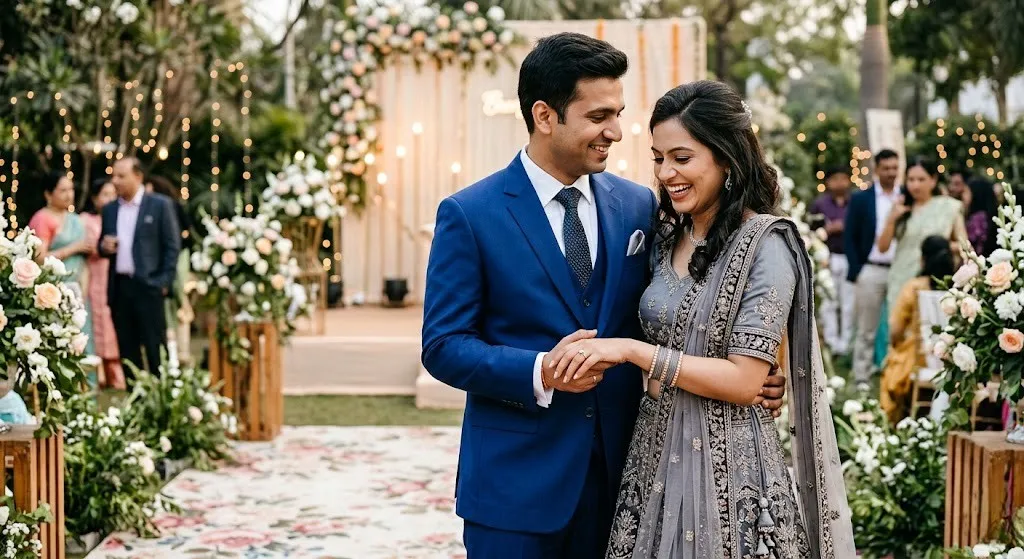
In 2026, the wedding landscape has changed. We’ve moved past the post-pandemic “revenge travel” wedding boom and settled into a reality where inflation is a factor, but so is a deep desire for authenticity over performance. This guide is your roadmap. It isn’t a collection of surface-level tips; it is a deep-dive manual for the couple that wants a high-end experience on a grounded budget.
The New Era of Wedding Finance
The “Wedding Industrial Complex” is a phrase you’ll hear a lot. It refers to the massive global machinery designed to make you feel like your love is somehow less valid if you don’t have a five-tier cake or a flower wall. In 2026, we are fighting back with Strategic Spending.

The 2026 Shift: Experience vs. Stuff
Three years ago, it was all about the “Instagrammable moment.” Today, the trend has shifted toward “Guest Experience.” Couples are spending less on physical decor that ends up in a dumpster at midnight and more on high-quality food, interactive entertainment, and meaningful locations.
Why Debt is the Worst Wedding Guest
Before we talk about numbers, we have to establish a hard rule: Do not go into high-interest debt for a one-day event. According to Investopedia’s recent consumer reports, financial stress is one of the leading causes of early marital friction. Starting a life together with a 24% APR credit card balance because of a “dream” floral arrangement is a tactical error. This guide will show you how to scale your vision to your reality.
The Philosophy of “Marry Within Your Means”
This doesn’t mean you can’t have luxury. It means you define luxury differently. Is luxury a 500-person ballroom in a city you don’t like, or is it a 40-person private dinner at a Michelin-star restaurant? By the end of this guide, you’ll know exactly which “luxury” fits your bank account.

The Pre-Budget Mindset – Aligning with Your Partner
Before you call a single venue, you need to sit down with your partner for the most important conversation of your engagement: The “Naked” Money Talk.

1. Total Transparency
You cannot build a budget on secrets. You both need to lay out:
- Current Savings: What can you actually put toward this without emptying your “house down payment” or “emergency” funds?
- Monthly Cash Flow: How much can you realistically save from your salaries over the next 12–18 months?
- Existing Debt: If one of you is carrying significant student loans or car payments, how does that affect your “comfort level” with wedding spending?
2. The “Big Three” Value Exercise
Sit in separate rooms and write down the top three things you care about.
- Person A might say: The Food, The Open Bar, The Music.
- Person B might say: The Photography, The Venue, The Guest Count.

Compare the lists. Where they overlap is where you splurge. Where they don’t, you negotiate or cut. If neither of you put “Flowers” in your top three, then you have just saved yourself $5,000 by deciding to go with simple greenery or candles.
3. Managing Parental Contributions
This is where it gets tricky. In many cultures, particularly in regional celebrations across India or traditional Western families, parents want to contribute. But money often comes with “invisible strings.”
- The “Strings” Talk: If your parents are paying for 50% of the wedding, do they expect 50% of the guest list? If they want to invite 100 of their business associates and you wanted a small garden party, you have a conflict.
- The Strategy: Get a firm number from them early. Ask, “We are starting our budget planning. We’d love to know if you were planning to contribute a specific amount, so we can make sure our plans align with your expectations.”
4. The Psychology of the “Wedding Tax”
You’ll notice that a “party” venue might cost $2,000, but a “wedding” venue costs $5,000. This isn’t just a scam. Vendors charge a premium because the stakes are higher. A DJ at a birthday party can play a wrong song and everyone laughs. A DJ who misses the “First Dance” cue at a wedding has ruined a once-in-a-lifetime moment. You are paying for the vendor’s insurance, expertise, and the stress of perfection. Understanding this helps you negotiate with empathy rather than hostility.

Calculating Your Total Wedding Fund
Now, let’s get into the hard math. Your wedding fund isn’t a random number you pull out of the air. It’s a three-pillar structure.
Pillar 1: The “Seed” Money (Existing Savings)
Look at your current liquid assets. Financial experts at NerdWallet suggest keeping at least 3–6 months of living expenses in an emergency fund. Do not touch this for the wedding. Anything above that “safe” number can be considered “Seed Money.”
Pillar 2: The “Monthly Grind” (Savings Over Time)
If your wedding is 15 months away, and you can comfortably save $1,000 a month between the two of you, you’ve just added $15,000 to your budget. Pro-Tip: Set up an automatic transfer to a dedicated High-Yield Savings Account (HYSA). In 2026, rates are decent enough that your wedding money can earn a few hundred dollars in interest while you plan.
Pillar 3: The “Gifts” (Family & Crowdsourcing)
Once you have firm numbers from parents or relatives, add them here.
- Note: Do not count “potential” wedding gifts (cash from guests) as part of your budget. That money is for your honeymoon or your future. If you spend money you don’t have yet, you’re gambling.
The 10% “Safety Buffer”
Once you have your total (let’s say it’s $30,000), immediately subtract 10%. Your working budget is now $27,000. That $3,000 is your “Safety Buffer.” You will use it for things like last-minute tips, forgotten invitations, or a sudden increase in the price of peonies due to a global shortage.
10 Simple Personal Finance Tips for Beginners to Build a Better Financial Future
The Master Allocation (Where the Money Goes)
How do you actually divide the pie? While every wedding is unique, the 50/30/20 Rule is the gold standard for 2026.
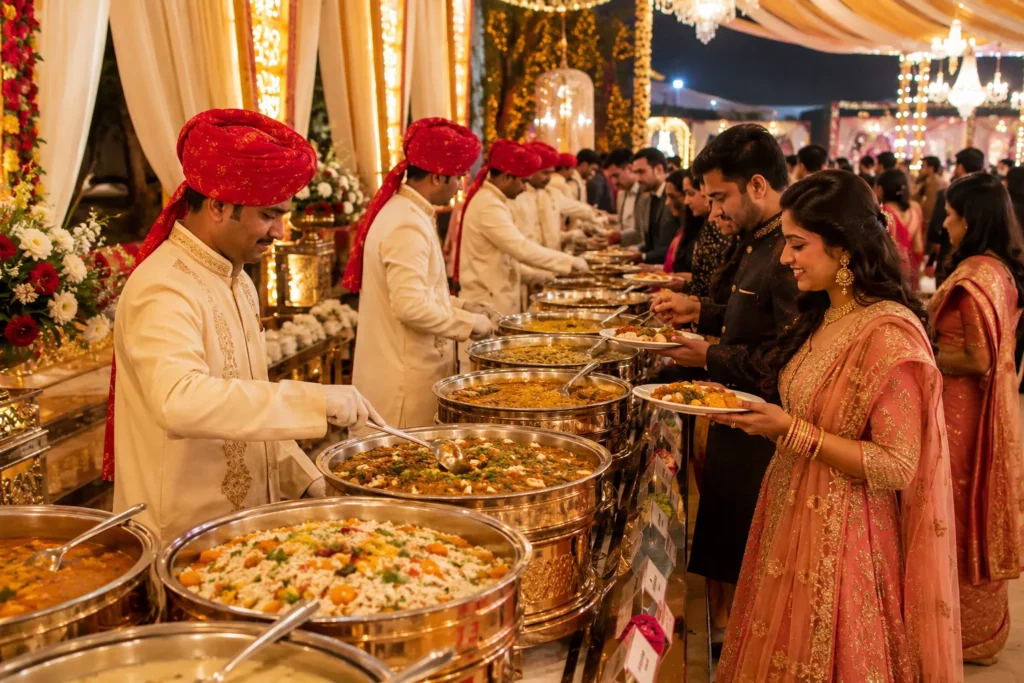
The 50%: The “Party” (Venue, Food, & Drink)
This is the “per-head” cost. It is the most expensive part because it scales with your guest list.
- Venue Rental
- Catering (Food & Service)
- Alcohol & Soft Drinks
- Rentals (Tables, Chairs, Linens)
The 30%: The “Vibe & Memories” (Media, Attire, & Art)
These are usually “fixed costs”—they don’t change whether you have 50 guests or 500.
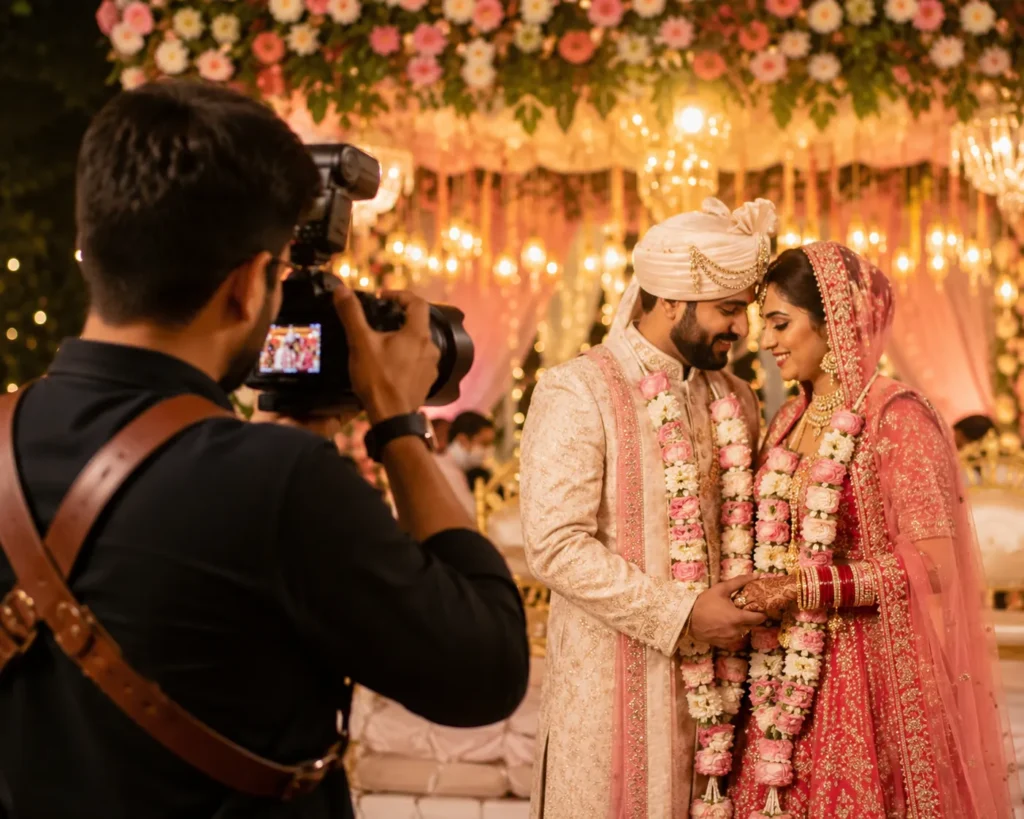
- Photography & Videography
- The Dress, Suit, and Alterations
- Hair & Makeup
- DJ or Live Band
- Flowers & Decor
The 20%: The “Engine Room” (Planning, Admin, & Safety)
The things people forget, but that make the day run.
- Wedding Planner or Day-of Coordinator
- Stationery & Postage
- Transportation & Hotels
- The 10% Buffer Fund
Comparison: Budget Tiers in 2026
| Category | The “Micro” ($10k) | The “Standard” ($35k) | The “Luxury” ($85k+) |
| Guest Count | 25 guests | 100 guests | 150+ guests |
| Venue | Restaurant Private Room | Dedicated Wedding Hall | Private Estate / Boutique Hotel |
| Catering | Family-style / Limited Menu | Plated 3-course / Full Buffet | Multi-course Tasting / Late Night Snacks |
| Photography | 4 Hours (Single Shooter) | 8-10 Hours (Two Shooters) | Full Weekend Coverage + Film |
| Attire | Off-the-rack / Pre-owned | Mid-range Designer | Custom Bespoke / Multiple Looks |
The Guest List – Your Biggest Budget Variable
If the venue is the heart of the wedding, the guest list is the blood pressure. It is the single most significant factor in determining whether your budget remains healthy or goes into cardiac arrest. Many couples approach the guest list emotionally, but to save your finances, you must approach it mathematically.
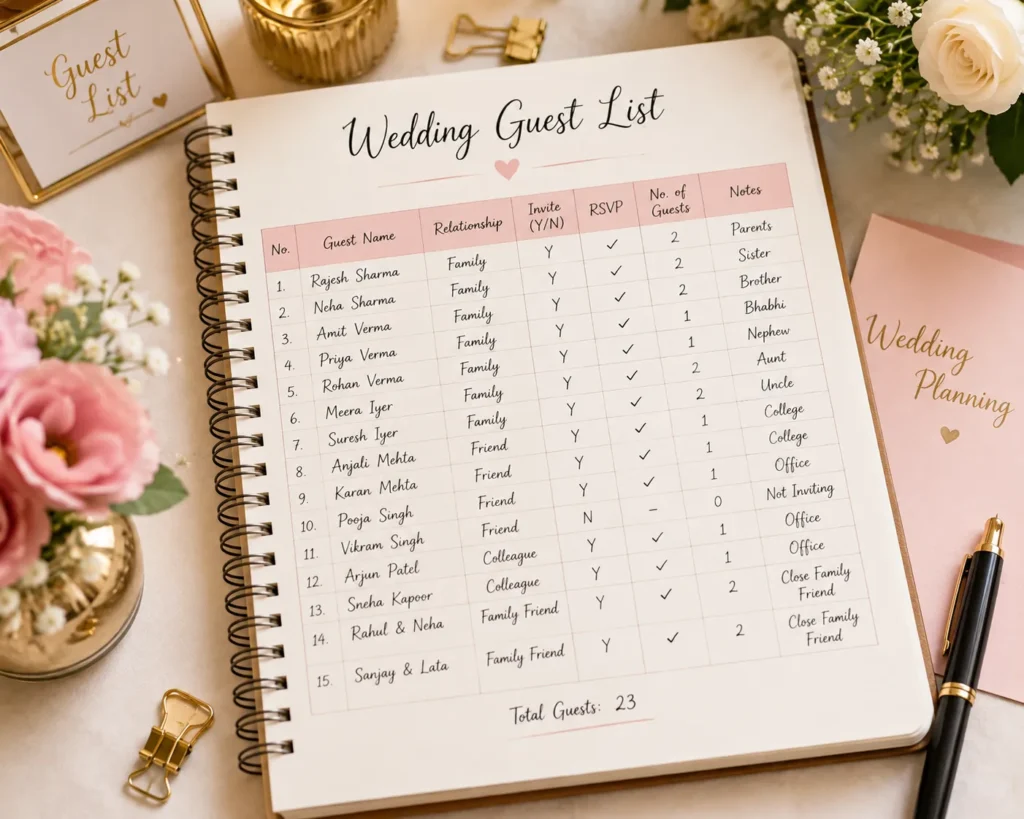
The “Price per Plate” Fallacy
Most people think, “It’s just one more person; the catering is only $60.” This is a dangerous simplification. In reality, every guest brings a tail of associated costs:
- The Invitation & Postage: $5–$15
- The Rental (Chair, Fork, Glass): $10–$25
- The Food & Cake: $60–$150
- The Alcohol: $30–$60
- The Favor/Gift: $5–$10
- The Thank You Card: $3
When you add it up, that “one extra person” is actually a $150 to $250 investment.
The “Circle of Proximity” Exercise
To trim the list without the guilt, use the “Circle” method. Start with the center and move outward:
- The Inner Circle: Parents, siblings, and “3 AM friends” (the people you’d call in a crisis).
- The Middle Circle: Close cousins, aunts, uncles, and friends you see at least once a month.
- The Outer Circle: Coworkers, distant relatives, and “obligation” invites (people whose weddings you went to five years ago).
The Rule: If you haven’t spoken to them (not including liking an Instagram post) in 12 months, they move to the “B-List” or the “No-List.”
Managing the “B-List” Professionally
A B-List isn’t rude; it’s practical. Send your A-List invites out 10–12 weeks before the wedding. As “Regretfully Declines” come in, send out your B-List invites.
- Pro-Tip: Ensure your RSVP date for the B-List is the same as the A-List so they don’t feel like an afterthought. Use digital RSVP tools like Zola to track these changes in real-time.
Venue Strategy – All-Inclusive vs. Blank Canvas
Choosing a venue is often a choice between Time and Money. In 2026, the “All-Inclusive” model is winning for busy professionals, but the “Blank Canvas” still holds the crown for those seeking a truly bespoke (and potentially cheaper) day.
1. The All-Inclusive Venue (The “Easy” Button)
These are typically hotels, country clubs, or dedicated banquet halls.
- The Cost Structure: You pay a “package price” (e.g., $150 per person). This usually includes the space, the food, the bar, the tables, the linens, and the staff.
- The Financial Benefit: Predictability. You know exactly what your bill will be (plus tax and service fees).
- The Hidden Catch: The “Service Charge.” In most high-end venues, a 22–25% service charge is mandatory. This is not a tip for the waiters; it’s an operational fee. Always calculate your budget based on the “Plus-Plus” price (Price + Tax + Service Charge).
2. The Blank Canvas Venue (The “Bespoke” Path)
Think of warehouses, public parks, or private barns.
- The Cost Structure: You pay a flat rental fee for the “walls.” Everything else—from the ice for the drinks to the power generator for the band—is up to you.
- The Financial Benefit: You can shop around. You aren’t forced to buy a $60 bottle of wine from a hotel; you can buy $15 bottles from a wholesaler.
- The DIY Trap: Many couples choose this to save money, only to realize that renting 100 dinner forks costs $300, and hiring a cleanup crew costs $1,000.
Venue Comparison Checklist (2026 Edition)
| Feature | All-Inclusive | Blank Canvas |
| Initial Quote | High (looks scary) | Low (looks like a bargain) |
| Final Cost | Moderate (standardized) | High (due to rental fees) |
| Coordination | Low (Internal coordinator) | High (You need a Planner) |
| Alcohol | Expensive (Markup) | Cheap (BYOB options) |
| Flexibility | Rigid | Total Control |
Authority Link: Before signing any venue contract, reviewThe Knot’s Venue Contract Checklistto ensure you aren’t being hit with “corkage fees” or “outside vendor fees.”
Catering & Alcohol – Feeding the Masses Without Breaking the Bank
Catering is where the most waste happens. In 2026, we are seeing a move away from the “Stiff 3-Course Meal” toward more social, cost-effective dining.
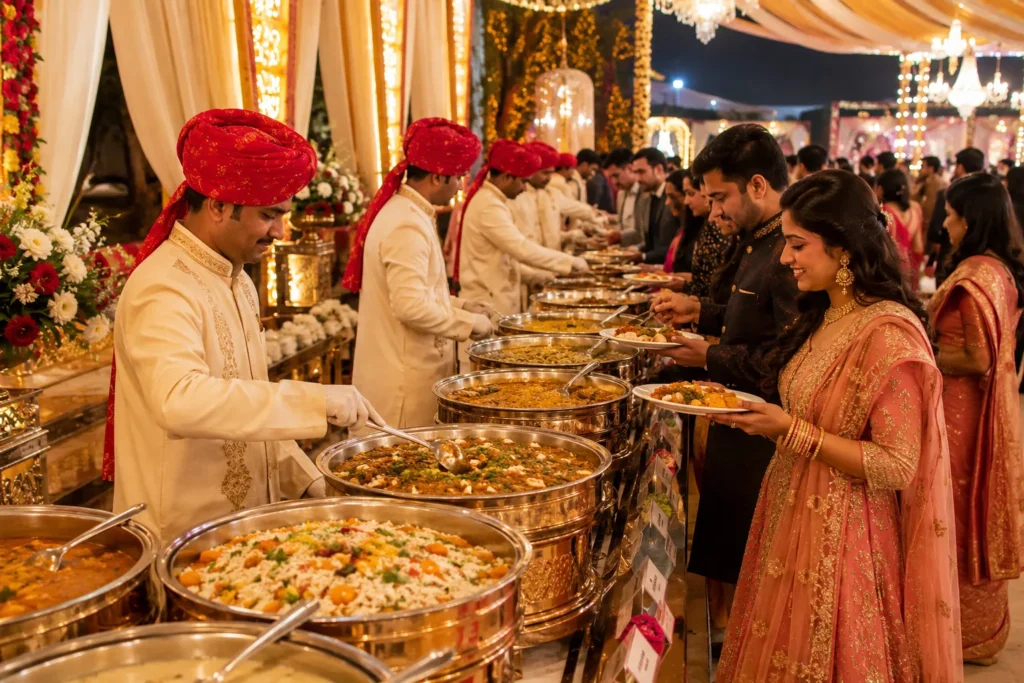
Plated vs. Buffet vs. Family Style
- Plated ($$$): The most formal. It requires more staff (waiters) which drives up the cost.
- Buffet ($$): Saves on labor, but you often have to order more food because people take larger portions.
- Food Trucks ($): Trendy and fun, but ensure your venue has the infrastructure (power/parking) and that your guests don’t mind standing in line.
The 2026 “Signature Drink” Strategy
Instead of a full open bar with every spirit imaginable, offer a “Limited Bar.”

- Beer & Wine: Pick two of each.
- Two Signature Cocktails: One “his” and one “hers” (or “theirs”). This limits your inventory, reduces waste, and allows you to buy in bulk.
Photography & The Digital Age
In 2026, photography has evolved. It’s no longer just about the “Shot List.” It’s about the Digital Legacy.
The Tiered Photography Model
- The “Full Package”: Engagement photos, 10 hours of coverage, second shooter, and a physical album ($5,000+).
- The “Digital-Only” Package: 6 hours of coverage, high-res digital files, no prints ($2,500–$3,500).
- The “Content Creator” Add-on: A new 2026 trend where you hire someone specifically to film “behind the scenes” on an iPhone for social media ($500–$1,000).
Budget Hack: Skip the “Engagement Session” if you’re tight on cash. While it’s a great way to “practice” in front of the camera, it’s an easy $500 to cut if you’re already comfortable with each other.
Attire, Beauty, and the “Hidden” Fashion Costs
When you search for “how to budget for a wedding,” the “Attire” category is often misrepresented as just “The Dress” or “The Suit.” In reality, the sticker price on the rack is only about 60% of what you’ll actually spend to look your best on the big day. In 2026, the trend has shifted toward “Sustainable Luxury”—which is a fancy way of saying people are tired of spending $4,000 on a garment they wear for eight hours.
The Alterations “Tax”
Standard bridal alterations in 2026 average between $500 and $900. If you buy a dress with heavy beading or multiple layers of lace, that price can double.
- Budget Hack: Look for “Ready-to-Wear” bridal lines or “Minimalist” silhouettes. Fewer layers and simpler hems mean fewer hours under the tailor’s needle.
Buy vs. Rent vs. Pre-Owned
- The Rental Revolution: Sites like Rent the Runway and specialized bridal rental boutiques have exploded in popularity. You can wear a $10,000 gown for $600.
- The “Pre-Loved” Market: Platforms like Stillwhite or PreownedWeddingDresses allow you to buy designer gowns for 50-70% off. Since most are only worn once, the quality is indistinguishable from new.
- The Custom Suit: For the groom/partner, skip the cheap rental tux that fits like a box. For the same price ($200–$400), you can often buy a custom-tailored suit that you will actually wear again for work or other events.
The Beauty “Hidden” Costs
Your Hair and Makeup Artist (HMUA) quote likely doesn’t include:
- The Trial: $150–$250 (Non-negotiable if you want to avoid a meltdown on the morning of).
- Early Bird Fees: If your ceremony is at 10 AM, and the artist has to arrive at 5 AM, expect a “Sunrise Fee.”
- Skin Prep: The “Bridal Glow” usually starts 6 months out with facials and dermatological treatments. Account for this in your “Wellness” budget, not your “Beauty” budget.
Tech & Stationery in a Paperless World
In 2026, physical paper is officially a “luxury” item. A full suite of letterpress invitations can easily cost $2,500+ when you factor in the paper, the printing, the inner envelopes, and the skyrocketing cost of postage.
The “Hybrid” Stationery Model
Many modern couples are opting for a hybrid approach to save thousands:
- Digital Save-the-Dates: Use Paperless Post or a personalized video message. Cost: $0–$50.
- Physical Invitations: A single, high-quality card with a QR Code on the back. No RSVP card, no details card, no map. Cost: $300–$600.
- Digital RSVP: Guests scan the code and RSVP on your wedding website. This saves you from chasing down lost mail and paying for return postage.
The Power of the Wedding Website
Your website (hosted on platforms like The Knot, Zola, or Joy) is your most powerful budgeting tool. It handles:
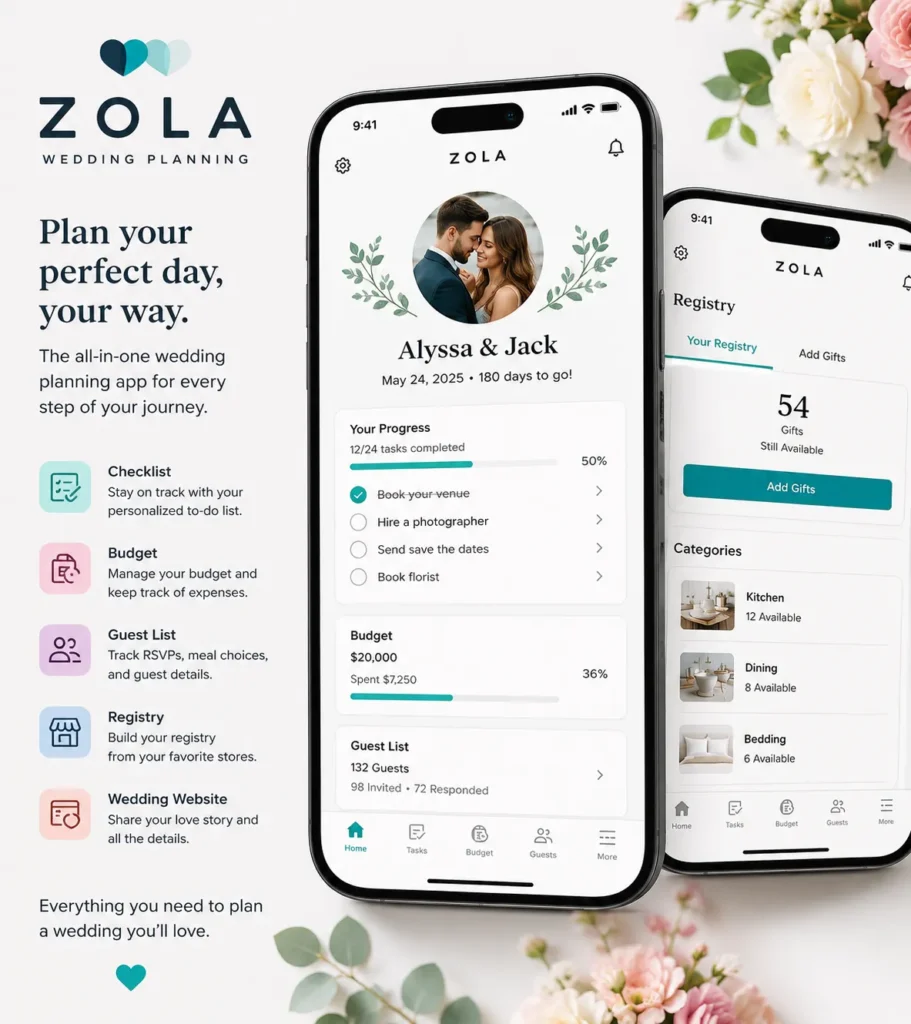
- Registry: Directing people to cash funds or specific items prevents “registry clutter.”
- FAQs: Reduces the number of texts you get asking about parking, dress codes, or “Can I bring my kids?”
- Live Updates: If the weather turns and you move the ceremony indoors, a mass email through your site costs nothing.
The DIY Trap – When “Saving Money” Costs Too Much
“I’ll just do the flowers myself!” is a sentence that has caused more wedding-day tears than any other. DIY (Do-It-Yourself) can be a brilliant way to save, but only if you understand the Time vs. Money Trade-off.
The “Hourly Rate” Test
Before you commit to a DIY project, ask yourself: How many hours will this take, and what is my time worth? If you spend 20 hours making hand-poured candle favors to save $200, you are essentially paying yourself $10 an hour. Is your pre-wedding sanity worth more than $10 an hour? Usually, the answer is yes.
What to DIY (The “Safe” List)
- Signage: Use a Canva template and print at a local shop.
- Playlists: A well-curated Spotify list for cocktail hour or dinner.
- Seating Charts: A simple mirror with a chalk marker or printed cards.
What to NEVER DIY (The “Danger” List)
- Catering: The risk of food poisoning and the sheer logistics of serving 100 people is a nightmare.
- Day-of Coordination: You cannot be the bride/groom and the person telling the caterer where the extra napkins are.
- Floral Bouquets: Flowers are temperamental. They wilt, they bruise, and they require refrigeration. Leave this to the pros or use high-quality silk alternatives.
Negotiation & Vendor Relations
Negotiation in the wedding industry isn’t like buying a used car. It’s about partnership. Vendors are small business owners who want to work with people they like.
Don’t Ask for a Discount; Ask for a “Modification”
Instead of saying, “Your price is too high,” try these 2026 negotiation scripts:
- “We love your work, but our budget for photography is strictly $3,500. Is there a package we could create—perhaps with fewer hours or without a physical album—that would fit that number?”
- “We are getting married on a Thursday. Does your venue offer a ‘Mid-Week’ rate or any additional perks for non-peak dates?”
The “Value-Add” Secret
Sometimes a vendor can’t drop their price because of their overhead, but they can throw in a “Value-Add.”
- Caterer: “I can’t drop the plate price, but I’ll include a complimentary late-night snack station.”
- DJ: “I can’t lower the fee, but I’ll provide uplighting for the reception at no extra cost.”
Regional & Cultural Nuances (The Multi-Day Budget)
If you are planning a traditional Indian wedding or a multi-cultural event in 2026, your budgeting “rules” are different. You aren’t planning one day; you’re planning a Production.
Managing the Multi-Event Spend
- Prioritize the Main Event: Allocate 60% of your total budget to the wedding ceremony and reception. The remaining 40% is split between the Mehendi, Sangeet, or Welcome Dinner.
- The “Venue Flip”: To save money, see if your venue can host multiple events. Booking a “Weekend Takeover” package is significantly cheaper than booking three separate venues.
- Shared Decor: Can your Sangeet florals be repurposed for the wedding mandap or altar? Talk to your florist about “Mobile Arrangements.”
The “Final 30 Days” Safety Net – Surviving the Home Stretch
You’ve made it through the venue tours and the cake tastings. You’re 30 days out. This is the “Danger Zone” where small, forgotten details start to nibble away at your remaining cash. This is exactly why we set aside that 10% Buffer Fund in Chapter 3.
The Gratuity Guide (2026 Standards)
Tipping in the wedding industry is a minefield. While not always mandatory, it is expected for service-based roles.
| Vendor | Expected Tip | When to Give |
| Catering Lead / Captain | $100 – $200 | End of reception |
| Waitstaff / Bartenders | $20 – $50 each | Often included in “Service Fee”—check contract! |
| Photographer / Videographer | $100 – $200 (if they don’t own the biz) | End of day |
| Hair & Makeup | 15% – 20% | After service |
| Delivery / Setup Crew | $10 – $20 per person | Upon arrival |
| DJ | $50 – $150 | End of night |
Pro-Tip: Prepare your tip envelopes two weeks before the wedding. Hand them to your Best Man, Maid of Honor, or Day-of Coordinator to distribute. You should not be reaching for your wallet while wearing a tuxedo or a gown.
The “Hidden Ninjas” of the Final Month
- Marriage License: It’s the most important piece of paper, but it usually costs between $30 and $100 depending on your jurisdiction.
- Wedding Party Gifts: Don’t forget to budget for the people standing by your side. A thoughtful gift (not necessarily expensive) is a must.
- Steam and Press: Your attire will likely need a professional steam before the big day ($50–$150).
- The “Feed the Help” Cost: As mentioned in the catering section, ensure you have a final count for vendor meals.
Post-Wedding – The Budget Doesn’t End at “I Do”
The honeymoon might be over, but the financial tail of a wedding can last for months.
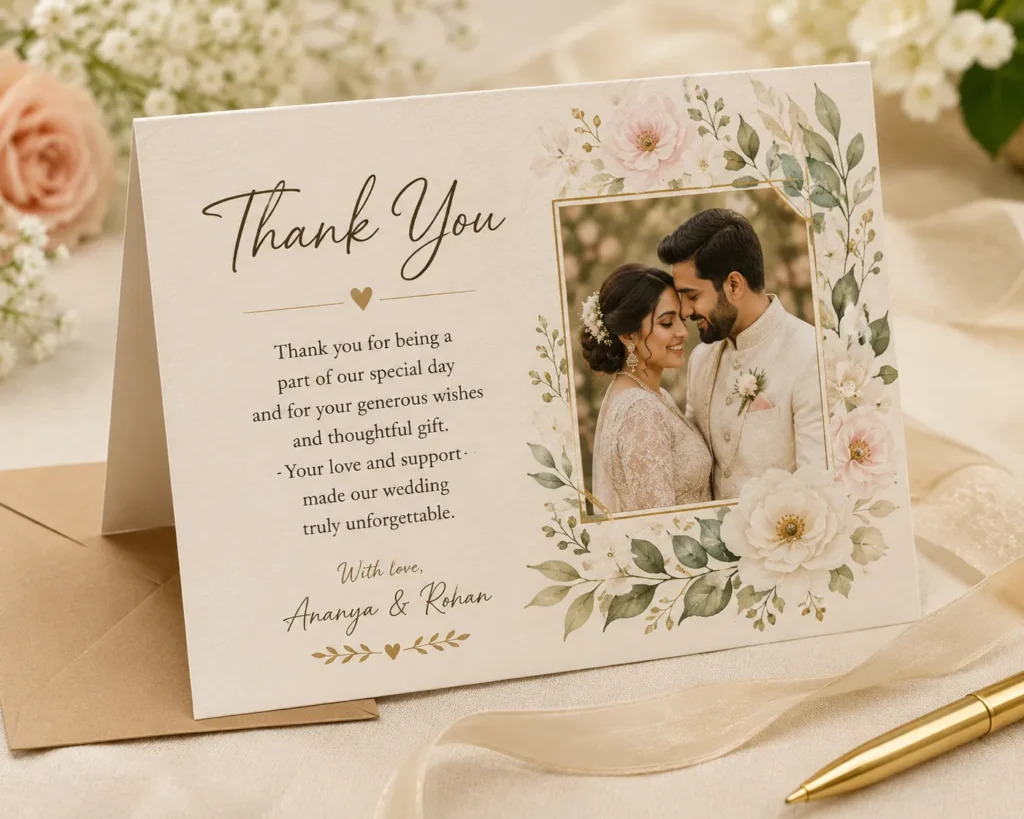
1. Thank You Cards & Postage
In 2026, the “Thank You” note is the last bastion of wedding etiquette.
- Cost: $100–$300 for cards + $0.70+ per stamp.
- Strategy: Buy these in bulk when you order your invitations to get a bundle discount.
2. Gown Preservation & Suit Cleaning
If you want to keep your dress for future generations (or for resale), you need it professionally cleaned and preserved.
- Cost: $250–$600.
- Resale Value: If you plan to sell on Stillwhite, a professional cleaning receipt is often required to get top dollar.
3. The Name Change (The Paperwork Fee)
If you are changing your name, there are costs associated with updating your Passport, Driver’s License, and other legal documents. Services like HitchSwitch can streamline this for a fee, or you can do the legwork yourself for just the cost of the new IDs.
The Ultimate Wedding Budget FAQ (The Mega-Expansion)
This section is designed to answer the “long-tail” questions that plague every wedding spreadsheet.
Q: What is the “Average” cost of a wedding in 2026?
A: “Average” is a tricky word. Nationally in the US, it’s around $35,000. However, in major metros like NYC or London, $60,000 is more common. In India, a “Big Fat Wedding” can exceed ₹50 lakhs, while an intimate ceremony can be done beautifully for ₹5 lakhs. Your average is whatever you can afford without debt.
Q: Can we ask for cash instead of a registry?
A: Absolutely. In 2026, it is the norm. Use a “Honeymoon Fund” or a “New Home Fund” on your wedding website. Guests generally prefer knowing their money is going toward a specific experience rather than a random toaster.
Q: How do we handle a “Destination Wedding” budget?
A: The rule of thumb: You pay for the party; they pay for the flight. You are responsible for the welcome dinner, the wedding day, and the farewell brunch. You are not responsible for your guests’ airfare or hotel rooms, though you should negotiate a “Room Block” discount for them.
Q: Is it okay to skip “Favors”?
A: Yes. Most favors (personalized matchboxes, sugared almonds) end up left on the tables or thrown away. If you want to spend that money better, make a small donation to a charity in your guests’ names and put a sign on the bar. It’s tax-deductible and more meaningful.
Q: How do I budget for “Unexpected Guests” who show up?
A: Always tell your caterer your final count is 5% lower than your actual RSVPs. Most caterers prepare 5–10% extra food as a buffer anyway. This keeps you from paying for “ghost plates.”
Conclusion – Starting Your Marriage on Solid Ground
We’ve covered everything from the $250-per-head catering math to the $10 tips for delivery drivers.
A wedding is a celebration, not a performance.
If you find yourself crying over the price of silk ribbons or arguing with your partner about the cost of a “late-night pizza station,” take a breath. The success of your marriage is inversely proportional to the amount of stress you allow the wedding planning to cause.
Your 5-Step “Take Action” Checklist:
- The Naked Talk: Have the money conversation tonight.
- The High-Yield Account: Open a separate wedding savings account tomorrow.
- The Big Three: Identify what you care about and cut the rest mercilessly.
- The Guest List: Be brutal. If you haven’t seen them in a year, they don’t need a $200 plate.
- The Buffer: Always, always keep 10% in the “Oops” fund.
By following this guide, you aren’t just planning a great party—you’re practicing the financial communication and compromise that will sustain your marriage for the next fifty years.
Happy planning, and may your budget always stay in the black!
For more deep dives into financial management and life milestones, check out The Wall Street Journal’s Personal Finance Section.