The financial services industry spends billions of dollars every year trying to convince you of one specific lie: that investing is complicated, dangerous, and best left to “professionals” who charge steep fees. They dress up basic mathematical concepts in confusing jargon to make you feel completely unqualified to manage your own money.
Wall Street thrives on your confusion. But the truth is entirely different. Achieving real, generational financial independence doesn’t require complex derivatives, crypto-mining, or staring at six different monitors of stock charts. It requires a high savings rate, a basic understanding of market history, and absolute behavioral discipline.
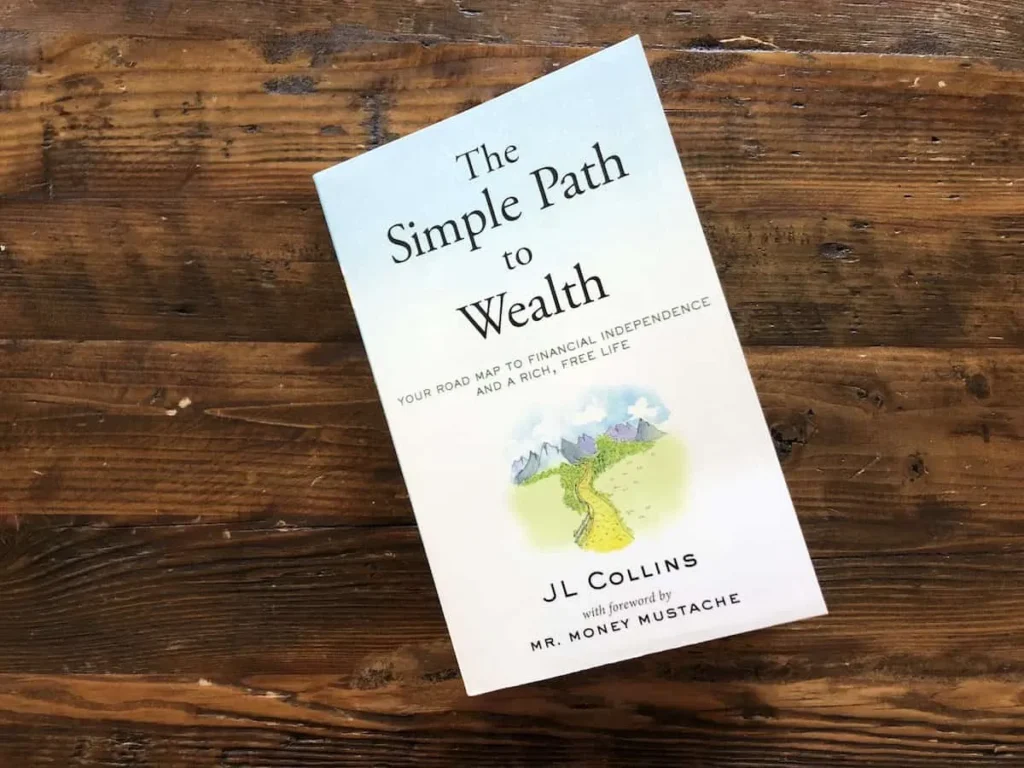
If you want to cut through the noise, you need the simple path to wealth.
This guide is an exhaustive deep-dive into the foundational concepts laid out by JL Collins. Whether you are drowning in student loans or sitting on a pile of cash you are too terrified to invest, this roadmap will completely restructure your relationship with money.
1: The Origin Story (Letters to a Daughter)
To understand the genius of jl collins simple path to wealth, you have to understand how it was written. It wasn’t drafted by a slick investment banker trying to sell you a high-fee mutual fund.
JL Collins was simply a father who realized his teenage daughter had zero interest in learning the complex minutiae of personal finance. She knew it was important, but she didn’t want to spend her life analyzing spreadsheets. She wanted to live her life.

Collins began writing a series of letters to her—distilling decades of financial wins and catastrophic mistakes into a few unshakeable rules. Those letters eventually became a famous blog series (the “Stock Series”), which was eventually compiled into the simple path to wealth book. The tone is candid, grandfatherly, and remarkably blunt. It is designed for people who want to put their money on autopilot and go enjoy their lives.
2: The Core Philosophy: “F-You Money”
Before you buy a single stock, you have to understand why you are saving. Most people save money to buy a nicer car, a bigger house, or luxury vacations. Collins flips this paradigm on its head.
Money is not meant to buy things; it is meant to buy time and autonomy. He calls this concept “F-You Money.”

“There are many things money can buy, but the most valuable of all is freedom. Freedom to do what you want and to work for whom you respect.” — JL Collins
When you live paycheck to paycheck, your employer owns you. If your boss demands you work over the weekend, you have to say yes because you have a mortgage payment due in two weeks.
When you have F-You money—a robust emergency fund and a growing investment portfolio—you operate from a position of absolute strength. You can negotiate your salary, walk away from toxic environments, or take a six-month sabbatical without your life falling apart. Simple path to wealth jl collins principles are built on this singular goal: buying back your freedom.
3: Debt—The Unacceptable Burden
You cannot build a skyscraper on a crumbling foundation. If you carry high-interest consumer debt, you are financially bleeding to death.
Collins views debt not as a normal part of adult life, but as a “hair-on-fire” emergency. When you carry a credit card balance at 22% interest, you are effectively paying a massive penalty just to participate in the economy.

The Debt Elimination Strategy
- Stop the Bleeding: You must immediately stop taking on new debt. Cut up the credit cards if you lack the behavioral discipline to pay them off completely every 30 days.
- The Interest Rate Pivot: While some advisors like Dave Ramsey advocate for the “Debt Snowball” (paying the smallest balance first for a psychological win), a simple path to wealth looks at the cold, hard math. Pay the minimums on everything, and throw every spare dollar at the debt with the highest interest rate.
- The Mortgage Exception: The only debt Collins treats with leniency is a low-interest fixed-rate mortgage on your primary residence. Even then, he views a paid-off house as an incredible psychological victory.
4: The Engine of Wealth (VTSAX & Chill)
This is where the simple path to wealth by jl collins separates itself from 99% of the financial advice on the internet.
When people start investing, they usually try to pick individual stocks. They buy Apple, Tesla, or whatever company is currently dominating the news cycle. This is incredibly dangerous. Even professional fund managers fail to consistently beat the market average over a 15-year horizon.
Instead, Collins champions a single, brutally effective investment vehicle: VTSAX (Vanguard Total Stock Market Index Fund) or its ETF equivalent, VTI.

Why VTSAX is the Ultimate Wealth Building Tool
- Absolute Diversification: When you buy one share of VTSAX, you are buying a tiny sliver of roughly 4,000 publicly traded US companies. If one company goes bankrupt, you barely notice.
- The Self-Cleansing Mechanism: The beauty of a total market index fund is that it automatically drops the losers. If a company fails, it falls out of the index. If a new, highly successful company emerges, it is automatically added. You never have to read a quarterly earnings report again.
- Ultra-Low Fees: Active mutual funds charge upwards of 1% to 2% in management fees. VTSAX charges an expense ratio of 0.04%. Over 30 years, those saved fees compound into hundreds of thousands of dollars remaining in your pocket.
5: Market Psychology and the Inevitable Crash
Knowing to buy VTSAX is only 10% of the battle. The other 90% is having the iron stomach required to hold it when the economy inevitably panics.
The stock market is a highly volatile instrument. It will crash. It will drop 20%, 30%, or even 50% during your investing lifetime. Jl collins the simple path to wealth warns readers that if you panic and sell your shares during a crash, you lock in your losses and destroy your financial future.

The Behavioral Playbook for Bear Markets
- The Market Always Goes Up: If you zoom out and look at the history of the US stock market over the last 100 years, it is a jagged line that relentlessly moves up and to the right. It has survived World Wars, the Great Depression, hyperinflation, and global pandemics.
- Ignore the News: Financial media makes money by selling fear. When the market is crashing, turn off the television and do not log into your brokerage account.
- Buy the Sale: If you are still working and saving, a market crash is the greatest gift you can receive. You get to buy shares of VTSAX on clearance.
6: The Two Phases of Your Financial Life
Your investment strategy should not remain static. It must adapt to the phase of life you are in. Collins divides this into two distinct eras.

1. The Wealth Accumulation Phase
This is the phase where you are working, actively saving, and building your portfolio.
- The Strategy: 100% Equities (VTSAX).
- The Logic: You have decades until you need the money, so you can easily absorb market volatility. You want maximum growth.
2. The Wealth Preservation Phase
This phase begins when you retire or achieve financial independence. You are no longer adding fresh capital from a job; you are living off your investments.
- The Strategy: Introduce Bonds (VBTLX – Vanguard Total Bond Market Index Fund). A common allocation is 75% Stocks / 25% Bonds.
- The Logic: Bonds act as a shock absorber. If the stock market crashes the year you retire, you don’t want to sell your stock shares at a massive loss to pay for your groceries. Instead, you sell your stable bonds to live on, giving the stock market time to recover.
The 4% Rule
How do you know when you have enough to retire? Collins relies on the classic 4% Rule (based on the Trinity Study). If you can live on 4% of your total portfolio value in the first year of retirement (adjusted for inflation thereafter), your money has a statistically massive probability of lasting longer than you will.
- Math: Multiply your annual expenses by 25. If you spend $40,000 a year, you need a $1,000,000 portfolio to be financially independent.
7: Tax-Advantaged Accounts (The Optimization Layer)
Taxes are the single largest expense you will pay in your lifetime. To accelerate your path, you must legally shelter as much money from the government as possible.

- The 401(k) / 403(b): Always contribute at least enough to get your full employer match. That is a 100% immediate return on your money. After that, max it out to lower your taxable income for the year.
- The Roth IRA: Money goes in after you have paid taxes on it, but it grows tax-free forever, and you pay zero taxes when you withdraw it in retirement.
- The HSA (Health Savings Account): The ultimate triple-tax-advantaged account. It goes in tax-free, grows tax-free, and comes out tax-free if used for qualified medical expenses.
The Ultimate Personal Finance Books Guide: Read Your Way to Real Wealth
8: The Simple Path to Wealth Summary
If you are looking for a quick the simple path to wealth summary, here is the entire philosophy distilled into actionable bullet points:
- Spend less than you earn. (Target a 50% savings rate if you want early retirement).
- Avoid debt entirely. Pay off existing debt aggressively.
- Build F-You Money. Maintain a healthy cash cushion so you are never desperate.
- Invest entirely in low-cost index funds. Specifically, VTSAX (Total US Stock Market).
- Never try to time the market. Time in the market beats timing the market.
- Hold the line during a crash. The market will always recover; panic selling is financial suicide.
- Add bonds when you retire. Use VBTLX to smooth out the ride when you start living off your portfolio.
9: The “PDF” Trap and Investing in Your Mind
Many people search the internet for the simple path to wealth pdf hoping to find a pirated or free download of the book. While frugality is a virtue, there is a fundamental psychological flaw in this approach.
When you refuse to pay $15 to $20 for a book that contains the exact blueprint to make you a multi-millionaire, you are operating from a scarcity mindset. Buying the actual book, keeping it on your nightstand, highlighting it, and referencing it during market downturns creates a tangible psychological commitment to your own financial future.
Instead of hunting for a sketchy PDF, invest in yourself. Go buy the physical copy, download the audiobook (narrated excellently by Collins himself), or simply check it out for free from your local public library.
Frequently Asked Questions (FAQ)
Q: Do I have to use Vanguard, or can I use Fidelity or Schwab?
A: While Collins explicitly champions Vanguard because of their unique, investor-owned corporate structure, you can absolutely execute this strategy at other brokerages. For example, if you use Fidelity, their equivalent to VTSAX is FSKAX. At Schwab, it is SWTSX. The key is ensuring you are buying a broad-market index fund with an incredibly low expense ratio.
Q: What if I am not from the United States? Does this still work?
A: The foundational principles—avoiding debt, saving aggressively, and buying broad index funds—apply universally. However, the specific tax-advantaged accounts (like the 401k) and the specific fund (VTSAX) are US-centric. International investors often utilize a global index fund (like VTWAX) and must adapt the tax strategies to their local country’s retirement laws (such as ISAs in the UK or Superannuation in Australia).
Q: Is it safe to be 100% in stocks during the Wealth Accumulation phase?
A: “Safe” is relative. In the short term, being 100% in stocks is highly volatile and inherently risky. Over a 20 or 30-year timeline, it is arguably the safest way to ensure your money outpaces systemic inflation. If you cannot sleep at night without bonds, you can add a small percentage of VBTLX, but understand it will drag down your long-term growth rate.
Q: What is the difference between VTSAX and VTI?
A: Nothing but the way they are traded. VTSAX is a mutual fund, meaning it is priced once at the end of the trading day and allows for automated investing. VTI is an Exchange Traded Fund (ETF) that holds the exact same underlying assets as VTSAX, but it trades throughout the day like a regular stock. Both are perfect vehicles for a simple path to wealth.
Q: Is The Simple Path to Wealth better than Rich Dad Poor Dad or The Psychology of Money?
A: They serve different purposes. Rich Dad Poor Dad is great for a paradigm shift regarding assets vs. liabilities, and The Psychology of Money is a masterclass in behavioral finance. However, for a concrete, step-by-step, actionable investment blueprint, Collins’ book is widely considered the superior, more practical guide.
For further foundational reading on market terminology, expense ratios, and historical market returns, consult verified financial education platforms like Investopedia and the Bogleheads Wiki, which perfectly align with JL Collins’ philosophy.