Warren Buffett famously directed in his will that 90% of his cash should be placed into a low-cost S&P 500 index fund for his family. His reasoning is simple: over any extended timeline, the vast majority of professional fund managers fail to beat the benchmark index. If Wall Street’s brightest minds routinely underperform a basic list of America’s 500 largest corporations, the average individual investor shouldn’t try to beat them at their own game. Instead, the smartest strategy is to simply own the whole game.
Learning how to invest in s&p 500 index funds removes the guesswork from building long-term wealth. You don’t have to predict which tech startup will dominate the next decade or worry if an individual company’s CEO suddenly makes a disastrous strategic choice. When you buy the index, you secure a stake in the aggregate power of the global economy.
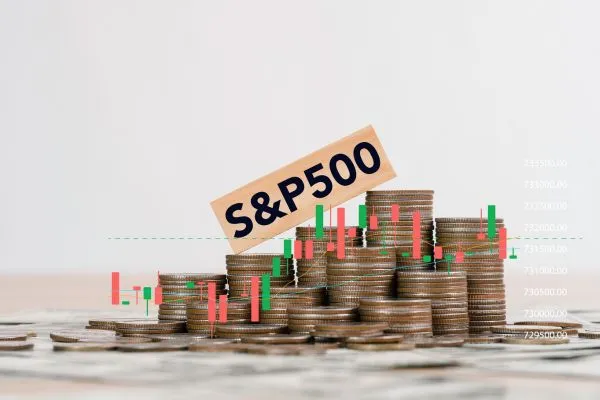
Let’s break down exactly how to invest in the s&p 500, analyze the structural variations between popular funds, and outline an automated strategy to keep your investment footprint secure and hyper-efficient.
1. Deconstructing the Index: What are You Actually Buying?
Before committing a single dollar, you need to understand the mechanics of what you are purchasing. The Standard & Poor’s 500 is not a single stock; it is an index that tracks the performance of roughly 500 of the largest publicly traded corporations listed on United States stock exchanges.
The index is market-capitalization weighted. This means that larger companies—measured by their total outstanding market value—exert a proportionately greater influence on the movement of the index than smaller ones. If a tech titan makes up 6% of the index, $6 out of every $100 you invest goes directly into that single enterprise.

As seen in global capital data, the index holds massive systemic weight, representing over half of the entire investable equity market cap worldwide. This gives you instant international exposure, because even though these corporations are technically headquartered in the United States, they generate a massive portion of their revenue across Europe, Asia, and emerging markets. When you figure out how to invest in the S&P 500 pools, you are essentially buying a diversified engine of global corporate commerce.
2. The Core Choice: ETFs vs. Index Mutual Funds
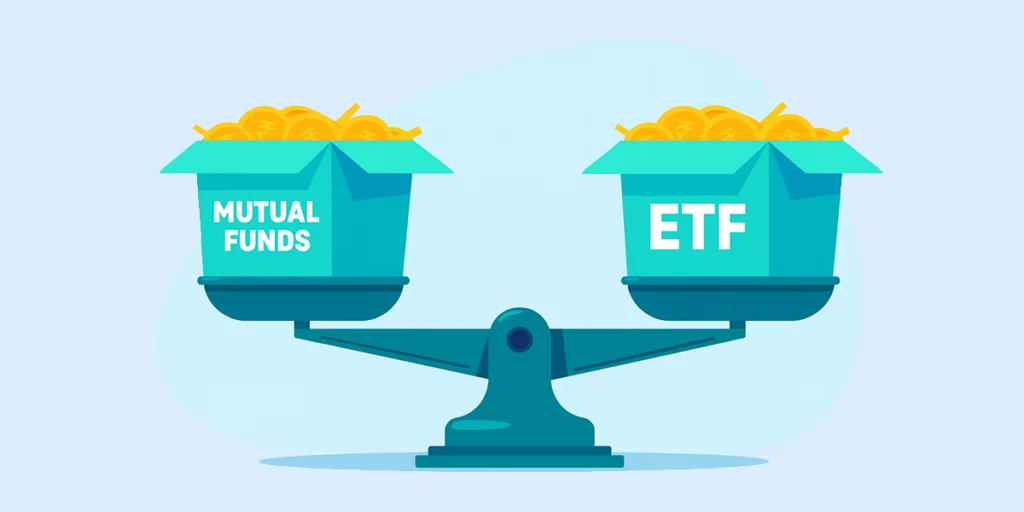
When researching how to invest in s&p 500 index structures, you will run into a fork in the road: you can either buy an Exchange-Traded Fund (ETF) or an Index Mutual Fund. Both hold the exact same underlying assets, but their mechanical behavior inside your portfolio is quite different.
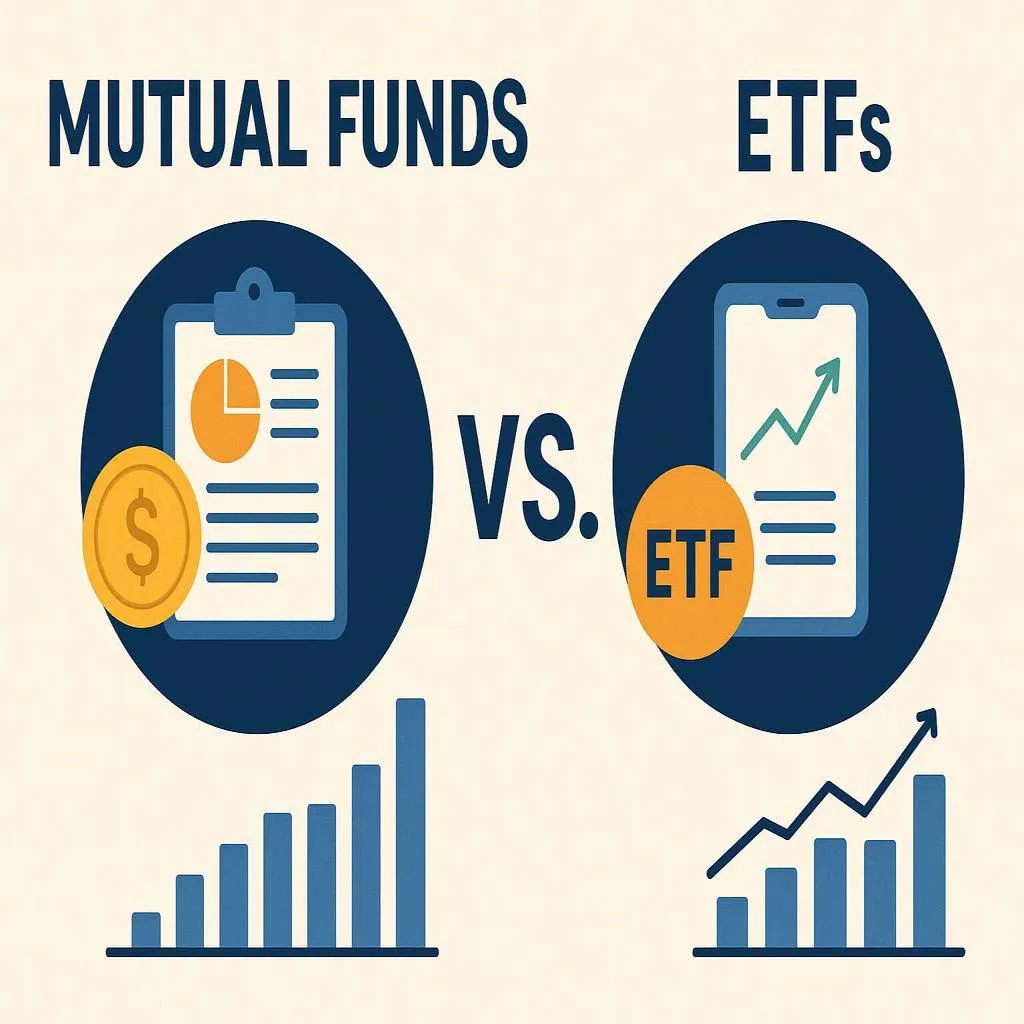
Exchange-Traded Funds (ETFs)
ETFs trade on an open stock exchange throughout the standard operating hours of the market, just like individual corporate stocks. If the market is open at 10:30 AM, you can log into your account and buy or sell your shares instantly at the current fluctuating market price.
- Tax Efficiency: ETFs are structured to use an “in-kind” creation and redemption process. This prevents the fund from having to sell internal assets to hand cash to exiting investors, reducing taxable capital gains distributions.
- Portability: You can easily move an S&P 500 ETF from one broker to another without needing to liquidate your position and trigger a tax bill.
Index Mutual Funds
Mutual funds do not trade in real-time. Instead, all purchase and sell orders are pooled together and processed exactly once per day after the market closes at 4:00 PM Eastern Time. You get whatever the final Net Asset Value (NAV) happens to be at that moment.
- Automated Precision: The primary benefit of an index mutual fund is ease of automation. Many brokerages allow you to set up automatic recurring transactions for exact dollar amounts (e.g., $150 every alternate Friday) down to fractional cents.
- Behavioral Protection: Because you cannot trade mutual funds intraday, they act as a psychological barrier against panic-selling during unexpected market drops.
3. The Implementation Blueprint: Setting Up Your Stack
If you want to understand how to invest in s&p 500 index fund setups cleanly, the actual execution sequence must be handled in a specific structural order. Do not just open a random account and start clicking buttons. Follow this explicit procedural progression:
1.Select Your Structural Account Shell:Tax Optimization Strategy.
Decide where your money will live. If this is for retirement, use a tax-advantaged wrapper like a Roth IRA or a Traditional IRA to protect your compounding returns from ongoing tax drag. For standard liquidity needs before age 59.5, utilize a traditional taxable individual brokerage account.
2.Establish a Brokerage Infrastructure:Eliminating Commissions.
Open an account with a low-cost, institutional provider. Stick to platforms that offer zero-commission trading for index vehicles and support fractional share investing. Mainstream giants like Vanguard, Fidelity, or Charles Schwab are reliable options.
3.Fund Your Account Core:Capital Clearance Process.
Link your bank account via an ACH secure bridge. Transfer your initial seed capital. If you plan to automate your contributions, link the transfer schedule to match your payroll frequencies to prevent cash from sitting idle.
4.Place Your Final Order Execution:Market Order vs. Dollar Automation.
Locate the specific ticker symbol for your chosen fund. If using an ETF, execute a “Market Order” during regular trading hours. If using a mutual fund, input your desired dollar contribution amount; the trade will execute automatically after the closing bell.
4. Evaluating Fund Families: Vanguard vs. Fidelity
For those looking into how to invest in s&p 500 for beginners, the choices usually narrow down to two primary options: Vanguard or Fidelity. Both institutions offer world-class indexing options, but they configure their funds slightly differently.
How to Invest in Vanguard S&P 500 Funds
When learning How to Invest in the S&P 500, many investors choose Vanguard because of its investor-friendly approach. Vanguard is unique because it is owned by its member funds, making the investors the actual owners of the company. This structural alignment ensures they constantly push fee structures as low as possible.
- The ETF Vehicle (VOO): Vanguard’s flagship S&P 500 ETF is VOO. It features a rock-bottom expense ratio of 0.03%. This means for every $10,000 you invest, Vanguard takes a mere $3 per year to manage the fund.
- The Mutual Fund Vehicle (VFIAX): Known as the Vanguard 500 Index Fund Admiral Shares, this carries an expense ratio of 0.04% but requires a minimum initial investment of $3,000 to open.
To view current disclosures, check out the investor tracking profiles directly via Vanguard.
How to Invest in S&P 500 Fidelity Funds
For investors researching How to Invest in the S&P 500, Fidelity is another popular choice due to its low-cost investing philosophy. Fidelity approaches index investing with aggressive pricing to win market share, offering historically cheap retail indexing options.
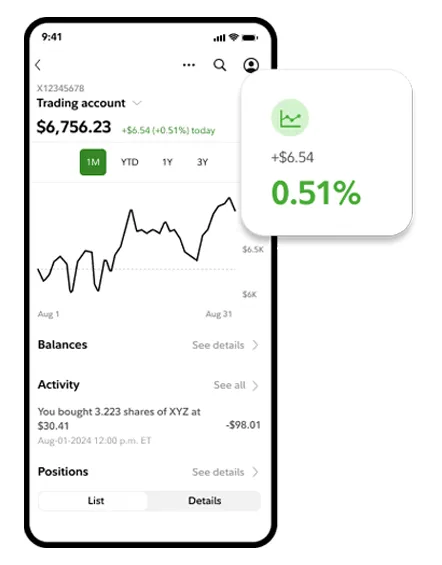
- The Mutual Fund Vehicle (FXAIX): The Fidelity 500 Index Fund is one of the most cost-efficient index options available. It sits at an expense ratio of roughly 0.015% and has zero investment minimums.
- The Zero-Fee Alternative (FNILX): Fidelity also offers the Fidelity Large Cap Index Fund (FNILX), which has a 0% expense ratio. While it doesn’t officially bear the “S&P 500” name due to index licensing fees, it tracks a nearly identical basket of large-cap corporate entities.
You can verify explicit fund tracking sheets and performance disclosures through Fidelity Investments.
5. Strategic Data Comparison Matrix
To quickly see how the primary options stack up side by side, review the index fund metrics below before deciding which ticker best fits your portfolio structure.
| Ticker Symbol | Fund Structure Type | Issuing Institution | Net Expense Ratio | Minimum Initial Investment | Intraday Liquidity Status | Best Structural Use Case |
| VOO | ETF | Vanguard | 0.03% | Cost of 1 Share (or less via fractional brokers) | High (Instant Exchange Hours) | Taxable accounts requiring high portability and low tax drag |
| FXAIX | Mutual Fund | Fidelity | 0.015% | $0.00 | End of Day Processing | Automated payroll deductions inside retirement accounts |
| SPY | ETF | State Street (SPDR) | 0.0945% | Cost of 1 Share | Ultra-High (Heavy Option Volume) | Active trading, tactical hedging, or short-term options writing |
| VFIAX | Mutual Fund | Vanguard | 0.04% | $3,000.00 | End of Day Processing | Long-term buy-and-hold investors utilizing Vanguard’s platform |
6. Sizing Math: How Much to Invest in the S&P 500?
A common stumbling block for investors is determining the exact size of their position. When assessing how much to invest in s&p 500 funds, you must consider your age, risk tolerance, and broader financial obligations.
💰 [Gross Monthly Income] ➔ Less [High-Interest Debt & Living Expenses] ➔ 15-20% Allocated to S&P 500 Indexing
When learning How to Invest in the S&P 500, one of the most important factors to consider is your investment time horizon. If you are young and have 10 to 30 years before retirement, your portfolio can generally withstand the short-term ups and downs of the stock market. In this situation, allocating 80% to 100% of your equity portfolio to an S&P 500 index fund is a common and effective long-term strategy.
On the other hand, How to Invest in the S&P 500 also means understanding when not to invest money in stocks. If you are planning to make a major down payment on a home within the next 2 to 3 years, the stock market may not be the safest place for that specific portion of your savings. Because markets can decline 20% or more during corrections, money needed in the near future is often better kept in high-yield savings accounts, money market funds, or other cash-equivalent investments rather than equities.
10 Essential Personal Finance Tips for Beginners
Utilizing Tax-Advantaged Limits
For your retirement allocations, keep annual regulatory caps in mind to maximize your compounding value. For instance, the Internal Revenue Service (IRS) set the combined annual contribution limit for traditional and Roth IRAs at $7,500 for individuals under age 50 (and $8,600 for those age 50 or older). Maximizing these spaces protects your dividend distributions from being clipped by annual income taxes.
Frequently Asked Questions (FAQ)
How to invest in s&p 500?
To begin investing, you need to follow a simple three-step infrastructure process:
- Open an account: Select a low-cost online brokerage platform that offers zero-commission trading on index products.
- Fund the vehicle: Connect your traditional bank account via an ACH secure electronic bridge to move your initial investment capital.
- Select your fund: Search for a highly liquid tracking vehicle (such as a broad-market ETF) and execute a standard market order to buy your shares.
How to invest in s&p 500 index?
It is a common misconception that you can buy the actual S&P 500 index directly. The index itself is merely a mathematical benchmark list maintained by S&P Dow Jones Indices to monitor the health of large-cap corporate equities. To gain exposure to it, you must buy an investable mirror product—specifically an Exchange-Traded Fund (ETF) or an Index Mutual Fund—that buys up all 500 underlying corporate stocks in their exact matching proportions on your behalf.
How to invest in s&p 500 index fund?
When you are ready to execute an order for an index fund, the workflow comes down to mechanical precision:
- Log into your chosen investment portal during standard market hours.
- Type the specific ticker symbol of the fund (like VOO or FXAIX) into the trading search bar.
- Input the amount of capital you want to deploy.
- Toggle your account settings to activate the Dividend Reinvestment Plan (DRIP) so every dollar of corporate profit paid out to you automatically purchases fractional shares of the fund without extra transactional fees.
How to invest in s and p 500?
The absolute best way to manage your ongoing cash flow into the market is by utilizing fractional share investing. In the past, you had to wait until you saved up enough money to buy one full whole share of an expensive fund. Today, modern financial systems let you buy assets by the dollar amount rather than the share count. If you have $25 left over at the end of the week, you can route that exact $25 directly into the index, capturing a tiny, proportional slice of all 500 companies instantly.
How to invest in s&p 500 for beginners?
For individuals completely new to the financial markets, the secret to success is removing all human emotion from the equation through Dollar-Cost Averaging (DCA). Do not try to watch the news and time the perfect moment to buy. Instead, establish an automated recurring system that buys a fixed amount of the index on the exact same day every single month, regardless of whether the stock market is currently up or down. This habit ensures you automatically buy more shares when prices are cheap and fewer shares when prices are inflated.
How to invest in the s and p 500?
When evaluating different funds that track this identical basket of stocks, your ultimate goal should be minimizing institutional fee drag. Look closely at the stated Net Expense Ratio of the fund. You want to stay strictly with funds that charge less than 0.05% annually. Keeping your structural costs at rock-bottom levels prevents Wall Street managers from taking a quiet percentage of your compounded returns over multi-decade time horizons.
How to invest in vanguard s&p 500?
Vanguard offers two primary institutional pathways to track the index:
- The ETF Route (VOO): You can buy the Vanguard S&P 500 ETF through almost any major retail brokerage platform. It carries an ultra-low 0.03% expense ratio and has no minimum balance requirement beyond the entry cost of a single fractional share.
- The Mutual Fund Route (VFIAX): If you open an account directly on Vanguard’s platform, you can utilize the Vanguard 500 Index Fund Admiral Shares. It allows for seamless, automated fixed-dollar transfers but requires an initial baseline deposit of $3,000 to get started.
How much to invest in s&p 500?
Your ideal allocation size should be governed by your near-term liquidity needs. As a baseline framework, aim to route 15% to 20% of your gross monthly income into broad-market index vehicles. However, keep regulatory boundaries in mind if you are maximizing tax-advantaged spaces. For example, the combined annual contribution limit across personal traditional and Roth IRAs sits at $7,500 for individuals under age 50 (and $8,600 for those age 50 or older). Never invest cash that you anticipate needing for major real-world expenses within the next three years.
How to invest in s&p 500 fidelity?
Fidelity provides some of the most competitively priced index products on the retail market. To build a position on their platform, you can open a standard account and target the Fidelity 500 Index Fund (FXAIX). It features an incredibly cheap expense ratio of just 0.015% and has a $0 minimum initial balance rule. Alternatively, you can look into the Fidelity Large Cap Index Fund (FNILX), which carries a 0% absolute fee structure and tracks a nearly identical basket of massive corporate enterprises.
How to invest in the s&p 500?
The most critical part of deciding how to house your index positions is selecting the correct structural account type. If you are building a wealth footprint for your retirement, you should buy your shares inside a tax-advantaged wrapper like a Roth IRA or a Traditional IRA. This layout completely shields your quarterly dividend distributions from annual capital gains taxation, allowing the cash to compound unhindered. For money you might need before retirement age, use a standard taxable individual brokerage account instead.