When the markets get choppy, your natural instinct isn’t always to chase the next 10x tech stock or speculative crypto asset. Sometimes, the goal is simple: keep your hard-earned cash entirely safe while picking up enough return to stop inflation from chewing it away. If you have been searching for the best way to invest money without risk, you have probably noticed that the financial world loves to give vague answers.
Before discussing the Best Way to Invest Money Without Risk, let’s clear the air right out of the gate. In the strictest sense, no financial asset is completely free of risk. However, the financial world does offer investments backed by powerful institutional guarantees—places where the chances of losing your original principal are extraordinarily low. These are the types of investments most people are referring to when they search for the Best Way to Invest Money Without Risk, because they prioritize capital preservation over high returns. In many cases, losing money would require a failure of the broader financial system itself rather than a normal market downturn.
With the Federal Reserve holding benchmark interest rates steady between 3.50% and 3.75%, the landscape for conservative savers has shifted. You don’t have to settle for a fraction of a percent at a traditional brick-and-mortar bank anymore. Let’s dive deep into exactly where to invest money without risk and map out how you can extract maximum yield without losing a single night of sleep.
The Two Faces of Risk: Capital Loss vs. Inflation
Before looking at specific accounts, we need to address a hidden trap that catches many conservative investors off guard. When people look for the best ways to invest money safely, they are usually trying to avoid capital risk—the painful experience of opening an investment account and seeing your $10,000 balance drop down to $8,500 because the stock market had a bad week.
However, when you eliminate capital risk entirely, you run headfirst into inflation risk. If the cost of groceries, rent, and fuel rises by 3.8% annually, and your “safe” investment only pays you 1.5%, your money is actually shrinking in terms of real purchasing power.

Therefore, our primary mission when investing money defensively is to secure an absolute guarantee on our principal while pushing the yield as close to—or above—the current rate of inflation as possible. To do this, you need to understand your budgeting foundations and identify exactly how much cash can be locked away for short or long intervals.
Where to Invest Money Without Risk: The Top 4 Safe Havens
If you want an ironclad guarantee that your principal will remain intact, your options are limited to accounts and securities backed by federal insurance or the taxing power of a sovereign government. Let’s break down the premium vehicles available today.
1. High-Yield Savings Accounts (HYSAs)
A traditional bank account is a wealth destroyer, often offering a miserable 0.01% interest rate. High-Yield Savings Accounts, primarily offered by online-only financial institutions, change that dynamic completely. Because online banks don’t have to fund expensive physical branches, they pass those structural savings directly to you.

- The Safety Guarantee: Look for institutions backed by the Federal Deposit Insurance Corporation (FDIC) or the National Credit Union Administration (NCUA). This ensures that up to $250,000 per depositor, per insured bank, for each account ownership category, is fully protected by the U.S. government.
- Current Yield Climate: Top-tier HYSAs are yielding anywhere from 3.80% to 4.20% APY.
- Best Used For: Emergency funds, near-term vacation savings, or any cash you might need to access within 24 hours.
2. Certificates of Deposit (CDs)
If you know for a fact that you won’t need your money for a fixed window of time—say six months, a year, or three years—Certificates of Deposit are an exceptional way to lock in a guaranteed return. When you open a CD, you enter an agreement with the bank: you leave your cash untouched for the duration of the term, and they guarantee a fixed interest rate that cannot change, even if the Federal Reserve cuts rates across the board later.

- The Safety Guarantee: Just like savings accounts, CDs at reputable banks carry full FDIC protection up to the $250,000 threshold.
- The Fine Print: If an unexpected emergency occurs and you must break the CD before the maturity date, you won’t lose your initial investment, but the bank will levy an early withdrawal penalty, usually clawing back a few months’ worth of accrued interest.
- Current Yield Climate: Shorter-term CDs (6 to 12 months) are currently hovering around 4.00% to 4.15% APY, while longer 3-to-5-year terms sit slightly lower near 4.20% due to an inverted yield curve structure.
3. U.S. Treasury Bills, Notes, and Bonds
When you purchase a U.S. Treasury security, you are directly lending money to the federal government. This is universally recognized as the absolute gold standard for safety in global finance. The financial markets treat U.S. Treasuries as a benchmark for “risk-free” assets because the government can print currency or raise taxes to meet its domestic obligations.
- Treasury Bills (T-Bills): Short-term maturities ranging from 4 weeks to 52 weeks. They are sold at a discount relative to their face value. For example, you might pay $960 for a T-Bill, and when the term ends, the government hands you a clean $1,000. The $40 difference is your guaranteed profit.
- Treasury Notes & Bonds: Medium- to long-term options (2 to 30 years) that pay a fixed coupon rate of interest every six months until they mature.
- Tax Advantage: The interest earned on U.S. Treasury securities is entirely exempt from state and local income taxes—a massive benefit if you live in a high-tax state like California or New York. You can purchase them directly with no middleman via TreasuryDirect.
4. Treasury Inflation-Protected Securities (TIPS)
If your primary fear is that runaway inflation will destroy the purchasing power of your nest egg, TIPS are a highly specialized asset class worth exploring. Unlike a standard bond where your payout is static, the principal value of a TIPS bond automatically adjusts based on movements in the Consumer Price Index (CPI).
- How It Functions: When inflation climbs, the principal value of your bond increases. When inflation drops, the principal drops. When the bond matures, you are guaranteed to receive either the adjusted principal or the original principal, whichever happens to be higher. This unique mechanism effectively eliminates the inflation risk that plagues almost all other cash-equivalent investments.
Where to Invest Money to Get Good Returns Safely
If your core objective is discovering where to invest money to get good returns without crossing over into the volatile world of stocks, real estate, or corporate debt, you have to get strategic with how you arrange your low-risk assets. You cannot simply dump all your capital into a single bucket and hope for the best. Instead, professional money managers use advanced liquidity structuring techniques to maximize yield.
The Art of the CD Ladder
Imagine you have $40,000 sitting in cash. If you throw all of it into a 1-year CD, your money is completely locked away for 12 months. If an emergency occurs, you face penalties. If interest rates suddenly jump up, you miss out on the higher returns.
Instead, you can construct a CD Ladder. You divide your $40,000 into four distinct $10,000 blocks and purchase the following:
- A 3-Month CD
- A 6-Month CD
- A 9-Month CD
- A 12-Month CD
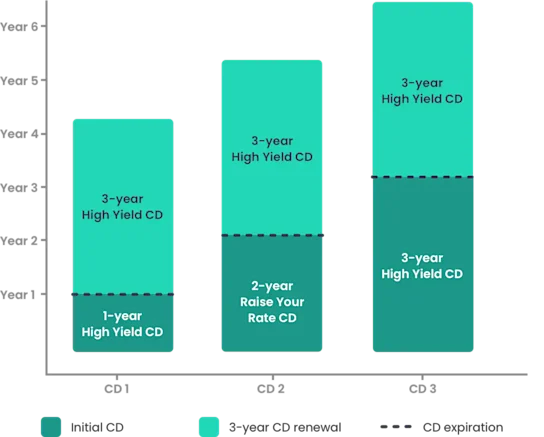
Every three months, one of your certificates will mature, giving you a liquid burst of cash. If you don’t need the money for real-world expenses, you simply roll that freshly matured cash into a new 1-year CD. Within a year, you will have a highly optimized system where you earn top-tier 1-year interest rates on all your capital, yet a chunk of your cash becomes completely liquid every 90 days.
Treasury Bill Rolling Strategies
For larger amounts of capital, running a matching strategy through Treasury bills offers unparalleled security and elite tax optimization. Because the yield on short-term Treasuries matches or beats average high-yield accounts, configuring automatic reinvestments within your brokerage account or through the federal government’s portal ensures your money compounds constantly without administrative overhead.
Best Areas to Invest Money: The Definitive Guide to Growing Your Wealth
How to Invest Money: A Step-by-Step Low-Risk Execution Guide
If you are trying to figure out how to safely arrange your capital, you need a logical checklist to deploy your cash systematically. This sequence prevents you from accidentally trapping your emergency funds in long-term accounts.
1.Establish Your Baseline Capital:Step 1.
Calculate your precise monthly living expenses. Before chasing yield, isolate a minimum of three to six months’ worth of pure operational survival cash. This money must remain completely liquid.
2.Deploy Liquid Emergency Cash into an HYSA:Step 2.
Take that baseline emergency reserve and move it into a high-yield savings account backed by the FDIC. Do not choose a bank based on name alone; compare current digital banking platforms to ensure you are capturing an interest rate near or above 4.00% APY.
3.Audit Your Upcoming Financial Liabilities:Step 3.
Identify any large, non-negotiable cash outlays you expect over the next 12 to 36 months (e.g., a down payment on a home, a tax bill, or educational tuition fees). Mark down the exact dates those funds will be required.
4.Lock Intermediate Goals Into Fixed Assets:Step 4.
Match those specific future dates with matching maturity terms via Certificates of Deposit or U.S. Treasury Bills. By matching your investment length to your real-world financial goals, you lock in predictable returns while eliminating any threat of market fluctuations.
Comparing the Absolute Best Ways to Invest Money
To help you choose the ideal home for your capital, let’s view these safe-haven vehicles side-by-side. This layout contrasts return profiles against access speeds and unique tax treatments.
| Investment Type | Current Yield Range (2026) | Minimum Deposit Requirement | Liquidity / Access Speed | Tax Treatment |
| High-Yield Savings Account | 3.80% – 4.20% APY | Usually $0 – $100 | High (Immediate 24-hour transfers) | Subject to Federal, State, and Local income taxes |
| Certificates of Deposit (CDs) | 3.95% – 4.30% APY | $500 – $2,500 average | Low (Penalties apply for early withdrawal) | Subject to Federal, State, and Local income taxes |
| U.S. Treasury Bills | 3.40% – 3.75% YTM | $100 minimum | Medium (Can sell early on secondary market) | Exempt from State and Local income taxes |
| Money Market Mutual Funds | 3.50% – 3.90% Yield | Varies by fund provider | High (1-2 business days redemption) | Subject to normal income taxes based on underlying assets |
A Crucial Note on Brokerage Sweep Accounts: Many digital brokerages now offer automatic “cash sweep” programs that pay highly competitive interest rates on uninvested cash. Always check to see if the brokerage sweeps those funds into underlying FDIC-insured partner banks. If they do not, you are exposed to broker default risk, which strips away the “zero-risk” status you are hunting for.
Frequently Asked Questions (FAQ)
What is the absolute best way to invest money without risk?
The absolute safest method is buying short-term U.S. Treasury securities (T-Bills) or placing your capital into an FDIC-insured high-yield savings account. Both options carry full federal guarantees up to legal limits, meaning your principal investment cannot be lost to market downswings.
Where can I invest money without risk to beat inflation entirely?
Beating inflation with zero risk is an uphill battle because safe yields naturally drop when inflation cools down. Your best choice for explicit inflation protection is Treasury Inflation-Protected Securities (TIPS), which mathematically adjust their core principal value to stay perfectly in lockstep with the Consumer Price Index (CPI).
Is there anywhere to invest money to get good returns without using the stock market?
Yes. By using a CD laddering strategy or buying short-term Treasury notes, you can lock in fixed returns of roughly 4.00% to 4.30% APY. This allows you to generate meaningful cash flow without exposing your portfolio to a single day of stock market volatility or corporate bankruptcies.
What is the main difference between an HYSA and a Money Market Fund?
An HYSA is a bank account protected up to $250,000 by FDIC insurance. A Money Market Mutual Fund is an investment pool that buys short-term corporate and government debt. While Money Market Funds are incredibly stable and aim to maintain a fixed $1 share price, they are not technically backed by federal insurance policies.
Can I lose money in a high-yield savings account?
No, provided your chosen financial institution is fully insured by the FDIC and your total deposit footprint within that specific bank stays under the $250,000 legal cap. If the bank files for bankruptcy, the federal government steps in to reimburse your account balances directly.
How does state tax impact my choice of safe investments?
If you live in a state with heavy local income taxes, buying U.S. Treasury bills is vastly superior to opening a bank CD. The interest income generated by federal T-Bills is legally shielded from state and local tax assessments, keeping more net yield inside your wallet.