Let’s be honest: financial planning usually feels about as exciting as watching paint dry on a tax form. Most of us treat our bank accounts like a high-stakes game of “Don’t Look, Don’t Tell.” We tap our cards, hope for the best, and only check the balance when we’re standing in the checkout line praying the “Approved” message pops up. Here the best Daily Personal Finance Tips to Secure Your Future.
But here’s the thing about “future you.” Future you is going to want a house. Future you is going to want to retire. Future you might even want to take a three-month sabbatical to learn how to make artisanal cheese in the French Alps. None of that happens by accident. It happens through micro-habits.
You don’t build wealth in one giant leap. You build it in $5, $10, and $50 increments. If you’re looking for the best daily personal finance tips to secure your future, you’ve come to the right place. We’re moving past the “don’t buy coffee” cliché and getting into the habits that actually change your net worth.
1. The “5-Minute Morning Dashboard”
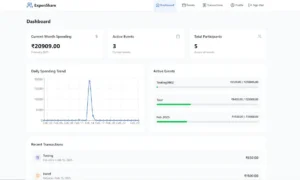
Before you check Instagram or the morning news, check your money. Why? Because avoidance is the mother of all financial disasters. It’s the best daily Personal Finance Tips.
The Best Daily Personal Finance Tips Habit : Open your banking app every single morning. Look at two things:
- Your current balance: Is it what you expected?
- Pending transactions: Did that “free trial” actually end? Did you get double-charged for dinner?

When you look at your money daily, it loses its power to scare you. You start to see patterns. You notice that you’re spending $15 a day on “small” things that add up to $450 a month. Awareness is 90% of the battle.
2. Implement the “24-Hour Cooling Off” Rule
We live in an age of frictionless spending. Between Apple Pay, Amazon One-Click, and Instagram ads that seem to read our minds, it has never been easier to spend money we haven’t earned yet.

The Best Daily Personal Finance Tips Habit : For any non-essential purchase over $50, you must wait 24 hours.
If you still want it tomorrow, buy it. But more often than not, that “must-have” gadget or trendy jacket loses its luster once the dopamine hit of the “Add to Cart” button wears off. This simple daily filter can save you thousands of dollars a year in buyer’s remorse.
3. The “Anti-Subscription” Daily Audit
Subscriptions are the silent killers of the modern budget. They are “financial vampires”—tiny amounts of blood-letting that go unnoticed until you’re lightheaded.
The Best Daily Personal Finance Tips Habit : Every time you see a recurring charge hit your account, ask: “Have I used this in the last 30 days?”

If the answer is no, cancel it immediately. Don’t say “I’ll do it later.” Do it while the notification is on your screen. According to Forbes, the average consumer spends over $200 a month on subscriptions—many of which they’ve forgotten about.
4. Master the “Round-Up” Investment
If the word “investing” makes you want to hide under your desk, start small. Really small. Like, “pennies” small.
The Best Daily Personal Finance Tips Habit : Use a “round-up” tool or app.
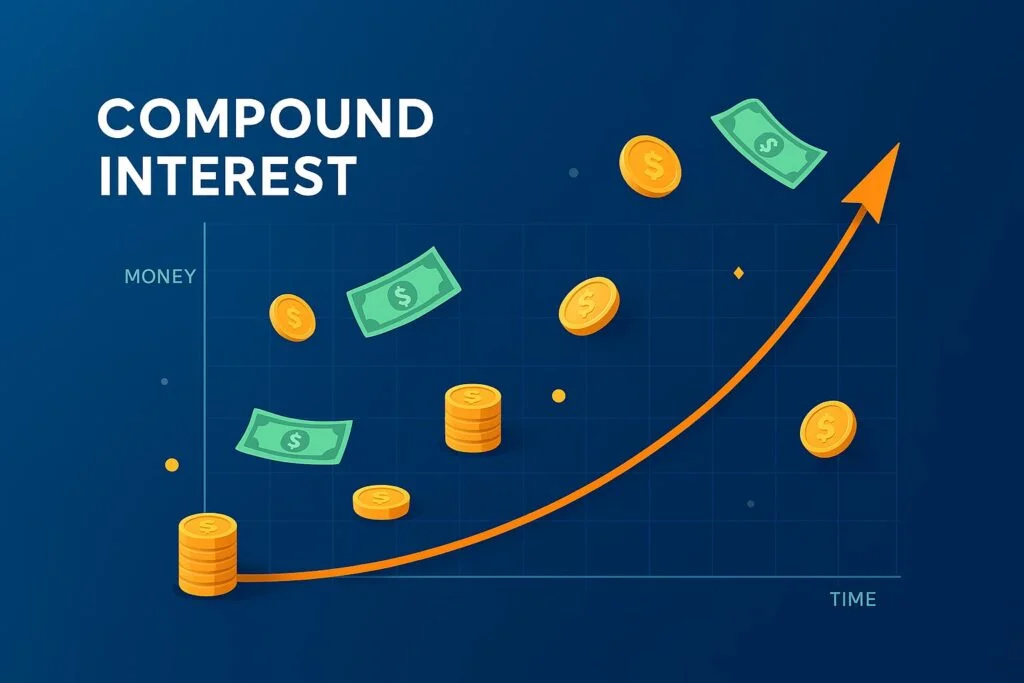
Many banks and apps like Acorns will round up your purchases to the nearest dollar and invest the change. If you buy a coffee for $4.25, $0.75 goes into an investment account. It feels like nothing, but it builds the habit of investing.
Over time, that “spare change” benefits from the most powerful force in the universe: Compound Interest.
The Math of the Future
The formula for compound interest is:

Even small daily additions ($P$) to your principal can grow exponentially over time ($t$). By the time you’re ready to retire, those rounded-up quarters could be the difference between a cramped apartment and a beachfront condo.
5. The “Daily No-Spend” Challenge
Gamifying your finances is the fastest way to stay motivated. If you look at your calendar, how many days a week do you spend zero dollars (excluding fixed bills like rent)? For most people, that number is zero.
The Best Daily Personal Finance Tips Habit : Aim for 2–3 “No-Spend Days” per week.
Pack your lunch, skip the convenience store, and find free entertainment. Mark these days on a physical calendar or a habit-tracker app. It builds a psychological “muscle” that helps you distinguish between needs and impulses.
6. Daily Defense: The Credit Score Pulse
Your credit score isn’t just a number; it’s your financial reputation. A high score means lower interest rates on mortgages and car loans, which can save you $100,000+ over your lifetime.
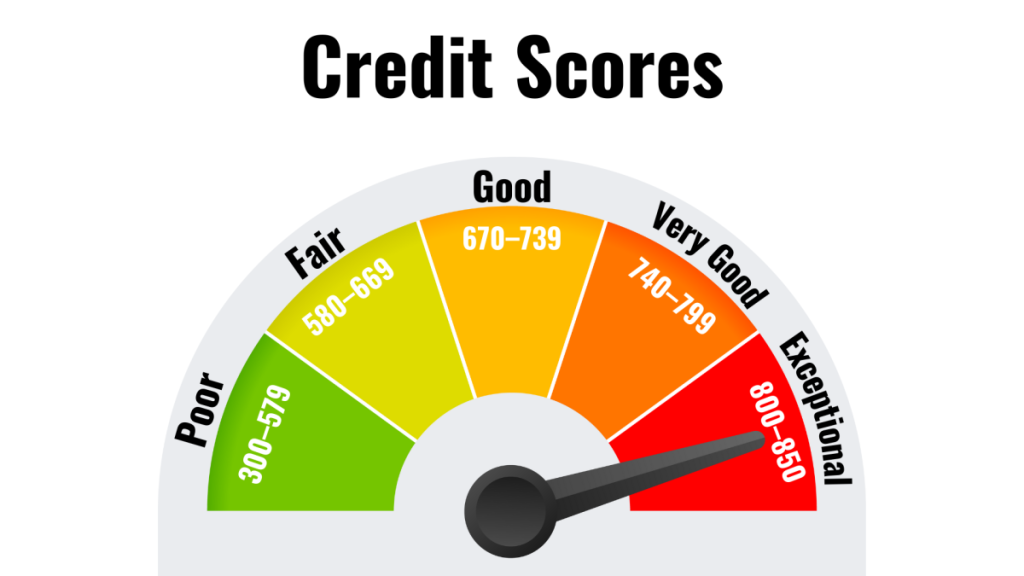
The Best Daily Personal Finance Tips Habit : Check your credit via a free service (like Credit Karma or your banking app) once a week, but keep an eye on notifications daily.
If you see a sudden drop or an inquiry you didn’t authorize, you can catch identity theft before it ruins your record.
7. The “One-In, One-Out” Rule for Stuff
Clutter is just “unorganized money.” Every time you buy a new physical item, something else has to go.
The Best Daily Personal Finance Tips Habit : If you buy a new pair of shoes, sell an old pair on Poshmark or eBay.
This does two things:
- It puts a little cash back in your pocket.
- It forces you to consider the “cost of ownership” for everything you bring into your house. If you aren’t willing to get rid of something old, do you really need something new?
8. Automate Your “Wealth Gap”
The most successful people don’t “decide” to save money every day; they make the decision once and let technology do the rest.
The Habit: Set up an automatic daily or weekly transfer from your checking to your savings or brokerage account.
Even if it’s just $5 a day. That’s the price of a fancy energy drink. If you automate it, you learn to live on what’s left. This is known as “Paying Yourself First,” a core pillar of wealth building advocated by the Consumer Financial Protection Bureau (CFPB).
9. Food: The Daily Budget Destroyer
For most of us, the biggest “leak” in our daily budget is food. The difference between a $15 lunch and a $3 home-prepped meal is $12 a day. Over a working year, that’s $3,120.
The Habit: The “Evening Prep.”
Spend 10 minutes every night preparing your lunch or setting out the ingredients for breakfast. If you have a plan when you wake up, you’re 80% less likely to hit the drive-thru or order DoorDash in a moment of “hangry” desperation.
10 Essential Personal Finance Tips for Beginners
10. The Daily Gratitude Audit (The “Anti-Consumerism” Hack)
This sounds like “woo-woo” advice, but it is deeply practical. Most of our spending is driven by a feeling of “not enough.” We buy things because we’re stressed, bored, or feeling inadequate.
The Habit: Every night, write down three things you already own or experienced that you’re grateful for.
When you focus on what you have, the urge to fill a void with Amazon packages starts to disappear. Contentment is the ultimate budget-saving tool.
How to Organize Your Daily Finance Routine
To make this easy, here is a “Cheat Sheet” for your new daily routine:
| Time of Day | Action | Goal |
| Morning (9:00 AM) | Check Banking App | Awareness & Fraud Detection |
| Mid-Day (12:30 PM) | Eat Prepped Lunch | Save $10–$15 |
| Evening (6:00 PM) | Prep for Tomorrow | Reduce Stress & Impulse Spending |
| Before Bed (10:00 PM) | 24-Hour Rule Check | Cancel Impulse Purchases |
Why “Daily” Matters More Than “Annual”
Many people wait until New Year’s or tax season to think about their finances. The problem is that by then, the damage is done. You can’t un-spend the $5,000 you lost to small, daily leaks over the course of the year.
By focusing on daily personal finance tips, you turn wealth-building into a background process. You stop “trying” to save and simply become a person who saves.
Authority Resource
If you want to understand the deep psychology behind these habits, The Psychology of Money by Morgan Housel is essential reading. It reminds us that doing well with money has little to do with how smart you are and a lot to do with how you behave.
The Bottom Line
Securing your future doesn’t require a six-figure salary or a lucky break in the stock market. It requires you to show up for your money for five minutes every day.
Pick one habit from this list—just one—and do it for the next seven days. Once that feels easy, add another. Before you know it, you won’t be checking your bank account with fear; you’ll be checking it with the quiet confidence of someone who knows exactly where they’re going.
What’s the first habit you’re going to start tomorrow morning? Leave a comment or send this to a friend who’s ready to build a better future alongside you.