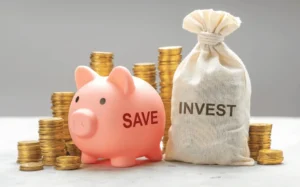
Most people treat their bank accounts like a game of Choose Your Own Adventure, except every path seems to end with a “low balance” alert and a frantic search for who charged them $14.99 for a streaming service they haven’t used since 2022.
Let’s be real: personal finance isn’t actually about math. If it were just math, we’d all be millionaires because the formula is simple: spend less than you earn and invest the rest. In reality, money is psychology. It’s about our habits, our traumas, our “treat yourself” moments, and that weird social pressure to keep up with people on Instagram who are probably deeper in debt than you are.
If you’re tired of feeling like your money has a mind of its own, this guide is for you. We’re breaking down the holy trinity of wealth-building: How to budget, save, and invest.
Part 1: Budgeting (The “GPS” for Your Cash)
Budgeting gets a bad rap. People think it’s a financial straitjacket that prevents you from ever seeing a latte again. In reality, a budget is just a GPS for your money. Without one, you’re just driving aimlessly and hoping you end up at a villa in Tuscany.
The Mindset Shift: Conscious Spending
Instead of thinking about what you can’t buy, think about Conscious Spending. This is a concept popularized by finance experts where you cut costs mercilessly on the things that don’t matter to you, so you can spend extravagantly on the things that do.
If you love travel, why are you spending $200 a month on a gym membership you never use? Cut the gym, keep the plane ticket.
The 50/30/20 Framework
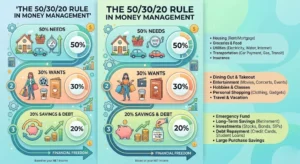
If you’re a beginner, don’t start with a complex spreadsheet. Use the 50/30/20 Rule. It’s the “Old Reliable” of the personal finance world.
| Category | Allocation | Examples |
| Needs | 50% | Rent/Mortgage, Groceries, Utilities, Insurance |
| Wants | 30% | Dining out, Hobbies, Netflix, that cool lamp from Target |
| Savings/Debt | 20% | Emergency fund, 401(k), paying off the credit card |
Authority Note: The Consumer Financial Protection Bureau (CFPB) offers excellent worksheets if you want to get granular with these numbers.
Part 2: Saving (Building Your “Sleep-Well-At-Night” Fund)
Saving isn’t about being a miser; it’s about buying freedom. When you have a stack of cash in the bank, your boss’s bad mood doesn’t ruin your day because you have “F-You Money.”
1. The Starter Emergency Fund
Before you do anything else—before you invest, before you buy a house—you need $1,000 to $2,000 in a separate account. This is for the “Oh Crap” moments: a flat tire, a broken tooth, or a surprise vet bill.
2. The High-Yield Savings Account (HYSA)
Stop keeping your savings in a traditional big-bank savings account that pays you 0.01% interest. That’s essentially letting the bank use your money for free.
Move your emergency fund to a High-Yield Savings Account. These accounts (offered by online banks) often pay 4% to 5% interest. On a $10,000 balance, that’s an extra $400–$500 a year just for sitting there. You can check current rates at NerdWallet to see who’s offering the best deals right now.
3. Sinking Funds: The Pro Secret
A “Sinking Fund” is just a fancy name for saving for a specific, non-monthly expense.
- Christmas/Holidays: Save $50/month all year so December isn’t a disaster.
- Car Maintenance: Save $100/month so new tires aren’t a “crisis.”
- Vacation: Save $200/month so you don’t put the trip on a credit card.
“Do not save what is left after spending, but spend what is left after saving.” — Warren Buffett
Part 3: Investing (Making Your Money Work While You Sleep)
This is where the magic happens. Budgeting and saving keep you afloat, but investing is what makes you wealthy.

The biggest mistake beginners make is waiting until they “have enough money” to invest. Because of compound interest, the time you spend in the market is way more important than the amount of money you put in.
The Power of the S&P 500
You don’t need to be a “stock picker.” You don’t need to find the next “moon” coin. Most professional fund managers can’t even beat the market over the long term.
Instead, look into Low-Cost Index Funds. An index fund, like one that tracks the S&P 500, allows you to own a tiny piece of the 500 largest companies in the US (think Apple, Amazon, Microsoft, and Disney). When the US economy grows, you grow.
Understanding Economics and Personal Finance: Your Guide to Financial Success
Tax-Advantaged Accounts
Before you open a regular brokerage account, use the accounts the government gives you “tax breaks” for:
- 401(k) / 403(b): If your employer offers a “match,” that is a 100% return on your money. If you don’t take it, you are literally throwing away part of your salary.
- Roth IRA: This is the “Holy Grail.” You contribute money that has already been taxed, but it grows tax-free, and you withdraw it tax-free in retirement.
Authority Resource: Investopedia’s Guide to the Roth IRA explains the income limits and rules better than anyone else.
Part 4: The Math of Wealth (Compound Interest)
To understand why you need to start today, let’s look at the formula for compound interest:
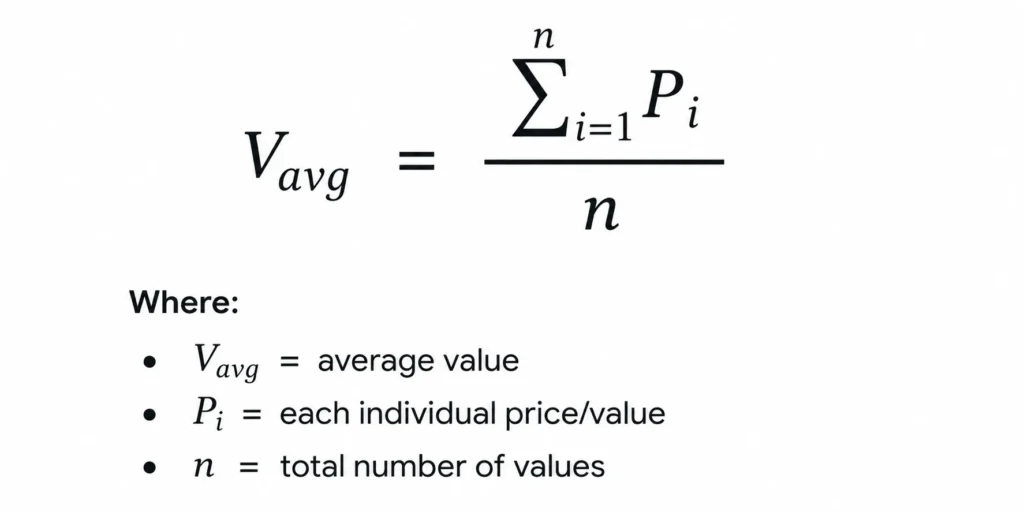
Where:
- $A$ = the future value of the investment
- $P$ = the principal investment (starting amount)
- $r$ = the annual interest rate (decimal)
- $n$ = the number of times interest is compounded per year
- $t$ = the number of years the money is invested
In plain English: If you invest $500 a month starting at age 25, assuming an 8% return, you’ll have roughly $1.5 million by age 65. If you wait until age 35 to start, you’ll have only $670,000. That 10-year delay cost you $830,000.
Part 5: Dealing with the “Debt Monster”
You can’t talk about personal finance tips without mentioning the elephant in the room: High-interest debt.

If you are carrying a balance on a credit card at 24% interest, you are in a financial house fire. No investment in the world (which typically returns 8–10%) can outrun a 24% debt.
The Two Debt Strategies:
- The Debt Snowball: Pay off the smallest debt first. This gives you a hit of dopamine and the psychological momentum to keep going.
- The Debt Avalanche: Pay off the debt with the highest interest rate first. This is mathematically the “correct” way, as it saves you the most in interest.
Pick whichever one you’ll actually stick to. Personal finance is 20% head knowledge and 80% behavior.
Common Pitfalls to Avoid
Even the best-laid plans can go sideways. Watch out for these three wealth-killers:
- Lifestyle Creep: This is when your income goes up, and your spending follows it like a shadow. You get a $10k raise and suddenly decide you need a car with a higher monthly payment. If your lifestyle grows at the same rate as your salary, you will always be “broke,” regardless of your tax bracket.
- Financial FOMO: Your cousin’s neighbor made $50k on a random crypto coin? Good for them. That’s gambling, not investing. Stick to the boring, proven path. Boring is what builds empires.
- Not Automating: If you have to manually move money into your savings account every month, you will forget or find a reason not to do it. Automate your savings and investments the day your paycheck hits.

Final Thoughts: Start Where You Are
The best time to start managing your money was ten years ago. The second best time is today.
Don’t try to overhaul your entire life in 24 hours. Start with one thing: Track your spending for the next 30 days. Just see where the money is going. Once you face the numbers, the “scary” part is over. From there, it’s just a series of small, intentional choices.
Wealth isn’t about having a Ferrari; it’s about having the ability to say “no” to things you don’t want to do and “yes” to the things that make life worth living.
Ready to dive deeper? Check out the Vanguard Blog for some of the best long-term investing education available.
Now, go grab a coffee (yes, you’re allowed to buy coffee) and open that High-Yield Savings Account. Your future self is already thanking you.